October 24-25, 2026 | The PNW Arts & Tech Symposium Returns with 9e26
Third Place Technologies, in partnership with Cornish College of the Arts at Seattle University, 9e26, and Future Arts, is pleased to announce the second annual PNW Arts & Tech Symposium, October 24-25, 2026.
The Pacific Northwest arts and technology landscape operates as a highly productive but historically decentralized network. In 2026, we return to close the gap with the PNW Arts & Tech Symposium, including an exhibition open to the public October 26th through October 31st.
Building on the 2025 Arts & Tech Symposium’s focus on fostering a thriving arts and technology community, this year’s gathering turns toward creative practice as a form of inquiry, bringing together artists, technologists, researchers, educators, and organizations working across disciplines and forms of knowledge.

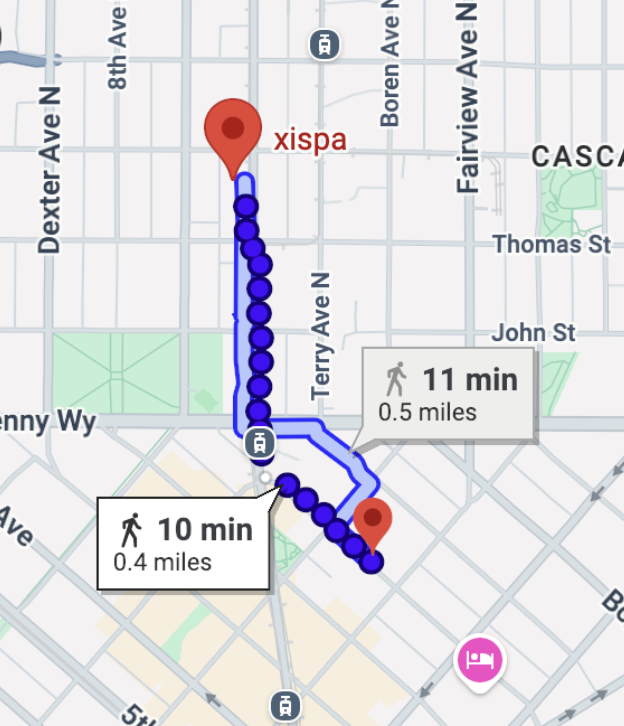
We are significantly expanding this autumn’s footprint by partnering with producer John Boylan to integrate 9e26: Ten Years Later, the historic commemoration of 2016’s 9 Evenings 2 (9e2), honoring the legacy of the pioneering 1966 9 Evenings: Theatre & Engineering (see 9e2 video). The resulting two-location event creates a physical and conceptual bridge between two exceptional venues, located just a 10-minute walk, or streetcar ride, apart:
- The Symposium (Cornish 9th Ave Gallery), The destination for practitioner, educator, and organizer presentations, including artist short talks, Saturday and Sunday Oct 24-25.
- 9e26 (xispa, at the former MadArt Studio): The site for a dedicated series of community discussions exploring the current state of interplay between art, science, and technology alongside their interactions with society at large, Sat Saturday adn Sunay 24-25.
- Arts & Tech Exhibition (Cornish 9th Ave Gallery), a premier tech-forward art exhibition, free and open to the public after the Symposium, Monday, October 26 through Saturday, October 31.
- Workshops (Cornith 9th Ave Gallery). As a part of our programming we offer seven peer knowledge-sharing workshops for Symposium attendees on Weds, Thurs, Fri, and Sunday Oct 21, 22, 23, and 25. You may sign up for up to two workshops while registering.

See our schedule and program details, including Symposium Talk Descriptions, 9e26 Conversations, and Workshops.
Both Locations are in South Lake Union, Seattle, a ten minute walk apart:
- 9th Ave Gallery is at 2014 9th Ave, Seattle
- xispa is at 325 Westlake Ave N #101, Seattle
By anchoring this dialogue across both an institutional gallery and a public-facing art innovation lab, this joint effort aims to transform isolated regional practices into visible, permanent infrastructure. If your work as a practitioner, educator, or community organizer exists at the intersection of art, technology, and design, this space is built for you.
Warm regards,
The 2026 Organizing Committee Shelly Farnham, Genevieve Tremblay, Jeff Brice, Jacob Fennell, and Joseph Gray (Third Place Technologies & Cornish College of the Arts at Seattle University) In collaboration with John Boylan (9e26) and Yuliya Bruk (Future Arts)
About the 2025 Symposium
On September 27, 2025, more than seventy-five artists, technologists, designers, educators, and community organizers gathered in Seattle for the PNW Arts & Technology Symposium, a one-day convening focused on strengthening connections across the region’s interdisciplinary creative ecosystem. Organized by Third Place Technologies and Future Arts with support from Cornish College of the Arts and Artist Trust, the symposium brought together practitioners working at the intersection of art, technology, and design to share ideas, showcase new work, and explore strategies for sustaining a vibrant community of practice.
Held at Cornish’s 9th Avenue Gallery, the daytime symposium combined keynote talks, panel discussions, rapid presentations, and an open town hall conversation. In the evening, the space transformed into a lively pop-up exhibition and social gathering featuring more than 25 regional artists, drawing over 200 attendees from across Seattle’s arts and technology communities.
Together, these events created a platform for dialogue, collaboration, and public engagement, highlighting both the depth of creative work happening in the Pacific Northwest and the need for stronger networks connecting artists, technologists, educators, and cultural institutions.
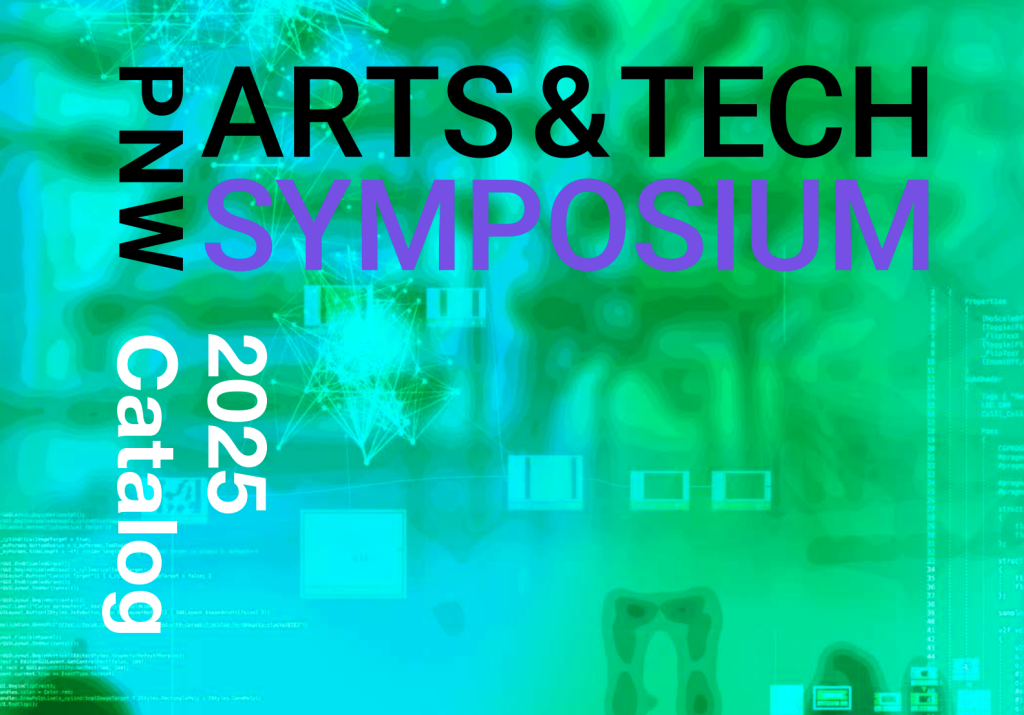
Please see the PDF of our 2026 Catalog here.
A Community Reconnecting
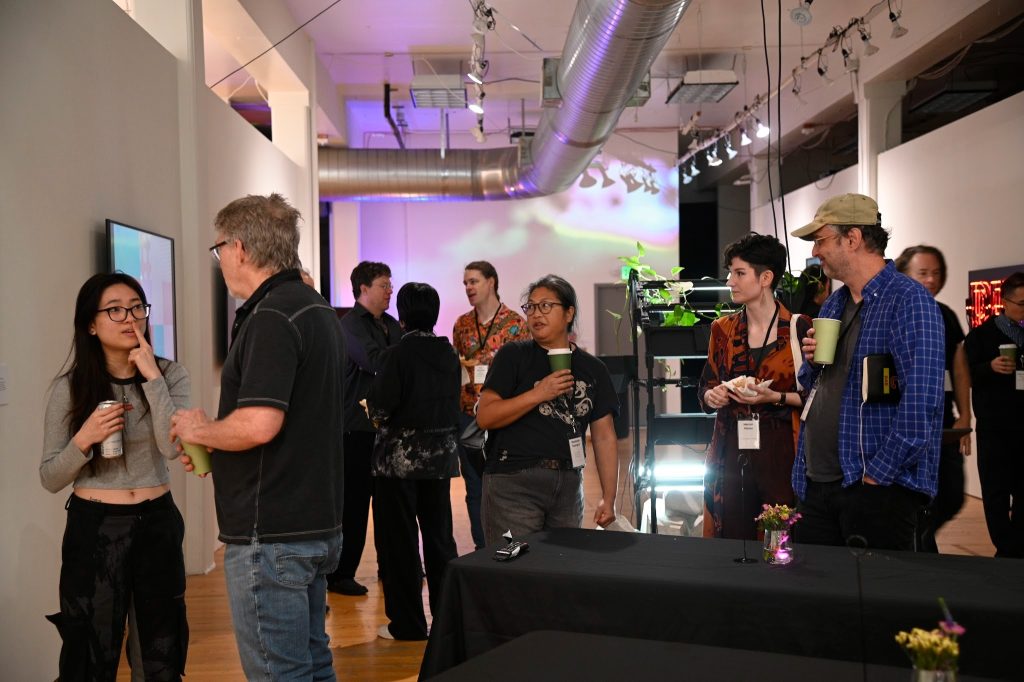
The symposium emerged in response to a widely shared perception that the Pacific Northwest’s arts-and-technology community—while rich with talent and experimentation—remains fragmented and under-recognized. Participants reflected on earlier regional initiatives, including the 2014 workshop and subsequent publication Fostering a Community of Innovation at the Intersection of Art and Technology in the Pacific Northwest, which articulated a vision for fostering interdisciplinary collaboration across the region.
More than a decade later, the need for renewed connection has become even more urgent. The disruption of arts and cultural infrastructure during the COVID-19 pandemic intensified existing fragmentation, underscoring the importance of gathering practitioners in person to share knowledge, build relationships, and imagine the future of the field together.
Throughout the day, participants repeatedly emphasized that community itself is the essential infrastructure of innovation. New media artists and creative technologists rely not only on exhibition spaces but also on opportunities to exchange ideas, learn new tools, mentor emerging practitioners, and form collaborative partnerships.
Perspectives from Artists and Community Leaders
The symposium opened with keynote remarks from Shelly Farnham, founder and president of Third Place Technologies, who reflected on the importance of creating social and playful spaces where interdisciplinary experimentation can flourish. She emphasized that breakthroughs in art and technology often arise when people from different domains—artists, engineers, researchers, designers, and civic innovators—come together to explore ideas collectively.
A second keynote from Ana Pinto da Silva highlighted the role of artists as cultural interpreters of technological change. In a moment defined by rapid developments in artificial intelligence and immersive media, she argued that artists play a critical role in shaping how society understands and engages with emerging technologies.
Panel discussions and rapid presentations throughout the day showcased a remarkable diversity of practices, from generative art and machine learning to robotics, ecological sensing, immersive media, and participatory installations. Speakers including Cam Smith, Diana Xie, Nicholas Bowen, and many others demonstrated how artists are both adopting and critically examining new technological tools.
The Rapid Talks session, curated by Jacob Peter Fennell, highlighted the breadth of experimentation taking place across the region—from Arctic fieldwork and ecological data visualization to human-AI collaboration and experimental coding practices.
Mapping the Ecosystem
A central goal of the symposium was to help map the people, places, and resources that make up the Pacific Northwest arts-and-technology landscape. Participants discussed the role of nonprofit organizations, artist-run initiatives, maker spaces, universities, and informal creative communities in sustaining interdisciplinary practice.
The afternoon town hall conversation, moderated by John Boylan and Lydia Boss, focused on practical questions of sustainability and access. Attendees discussed strategies for improving visibility, funding opportunities, mentorship networks, and shared infrastructure for artists working with emerging technologies.
Many participants noted that while the region hosts a vibrant array of independent initiatives, there remains a need for stronger coordination, communication, and documentation to ensure that the community’s work is visible both locally and internationally.
Exhibition and Public Engagement
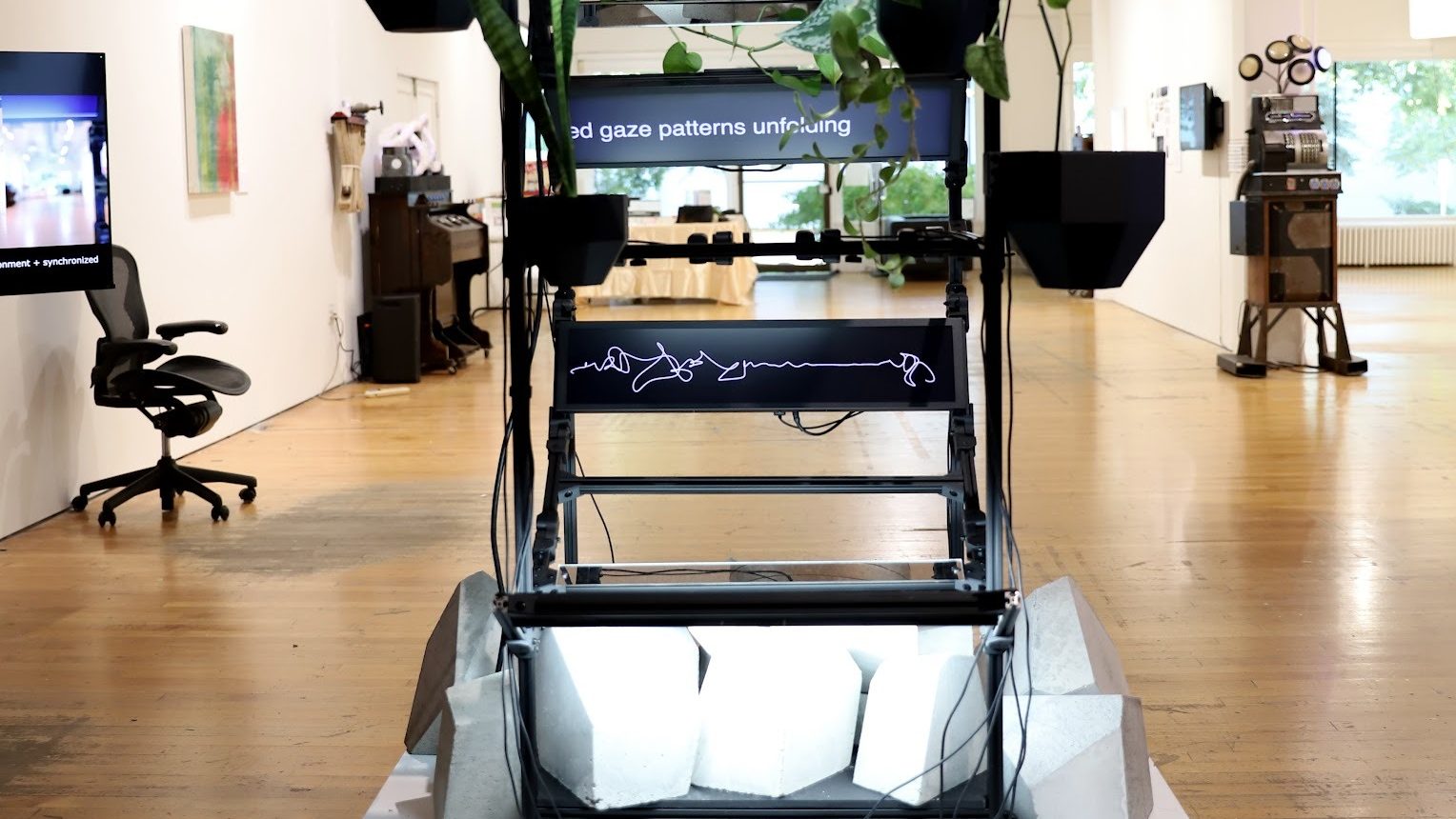
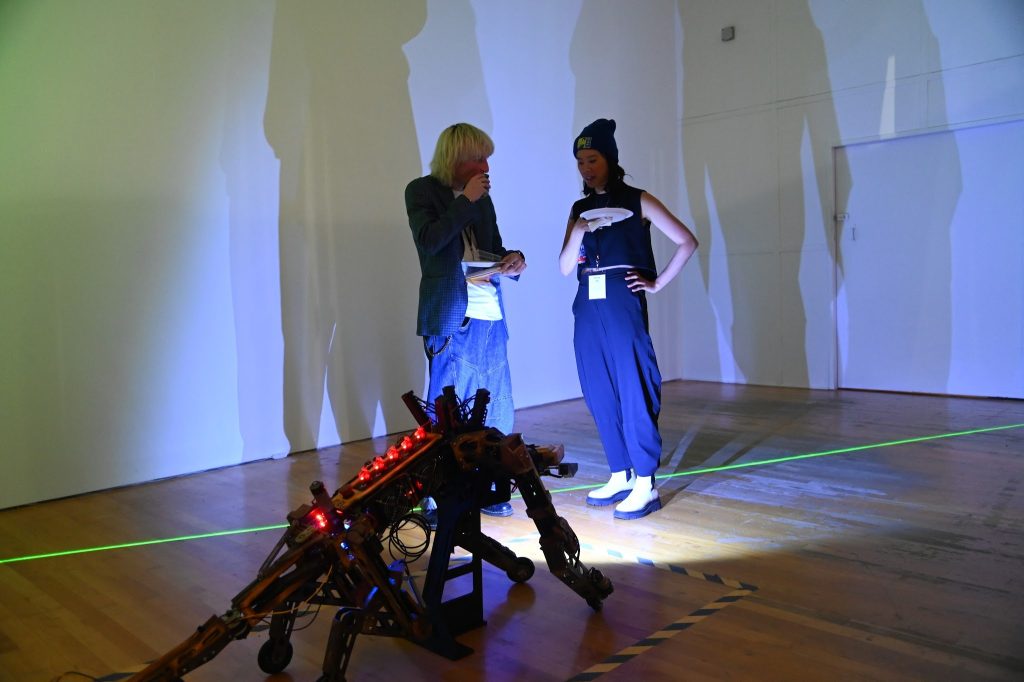
The evening pop-up exhibition extended the symposium’s themes into a public-facing event curated by Joseph Gray and Jeff Brice. Featuring installations, interactive works, and experimental media projects by more than 25 artists, the exhibition transformed the gallery into an active site of experimentation and exchange.
Drawing over 200 visitors, the exhibition demonstrated strong public interest in creative work engaging emerging technologies. Visitors encountered interactive installations, generative artworks, sensor-based systems, and AI-driven experiments, offering an accessible window into the evolving field of new media art.
Institutional Impact and Leadership
Beyond its immediate programming, the symposium reinforced the leadership roles of the organizing and supporting institutions within the regional and international arts-and-technology community. By convening practitioners across disciplines and creating a visible platform for their work, organizations such as Third Place Technologies and Future Arts demonstrate how nonprofit initiatives can catalyze collaboration, mentorship, and knowledge sharing.
Likewise, the participation of partners including Cornish College of the Arts and Artist Trust underscores the importance of institutional support in nurturing experimental creative practices. Events such as the PNW Arts & Technology Symposium strengthen these organizations’ connections with the communities they serve while elevating the region’s visibility within the broader global network of artists and technologists.
Looking Forward
Ultimately, the symposium revealed a regional community characterized by curiosity, experimentation, and collaboration. Artists working with emerging technologies are not merely adopting new tools—they are actively shaping cultural conversations about technology’s role in society.
Participants left the event with a renewed sense of momentum and shared purpose. By continuing to create spaces for dialogue, exhibition, and collective learning, the Pacific Northwest arts-and-technology community can strengthen its networks, amplify its voice, and contribute meaningfully to the global discourse around art, technology, and culture.
Managing Organizations
Partner Organizations