

Exhibition 2026
Our PNW Arts & Tech Symposium Exhibition features artists and creative technologists working in new media (electronics, software art, interactive, generative, mechanical or other new and emerging technologies). This is your chance to enjoy innovative art from the PNW arts+tech community.
Open to PNW Arts & Tech Symposium attendees ONLY Oct 24-25.
Open and Free to the General Public Monday, Oct 26 to Saturday, Oct 31, noon to 7pm, at the Cornish 9th Ave Gallery (2014 9th Ave, Seattle, WA 98121)
Exhibition Co-Chairs: Joseph Gray, Artist and Creative Technologist, and Jeff Brice, Professor, Cornish College for the Arts
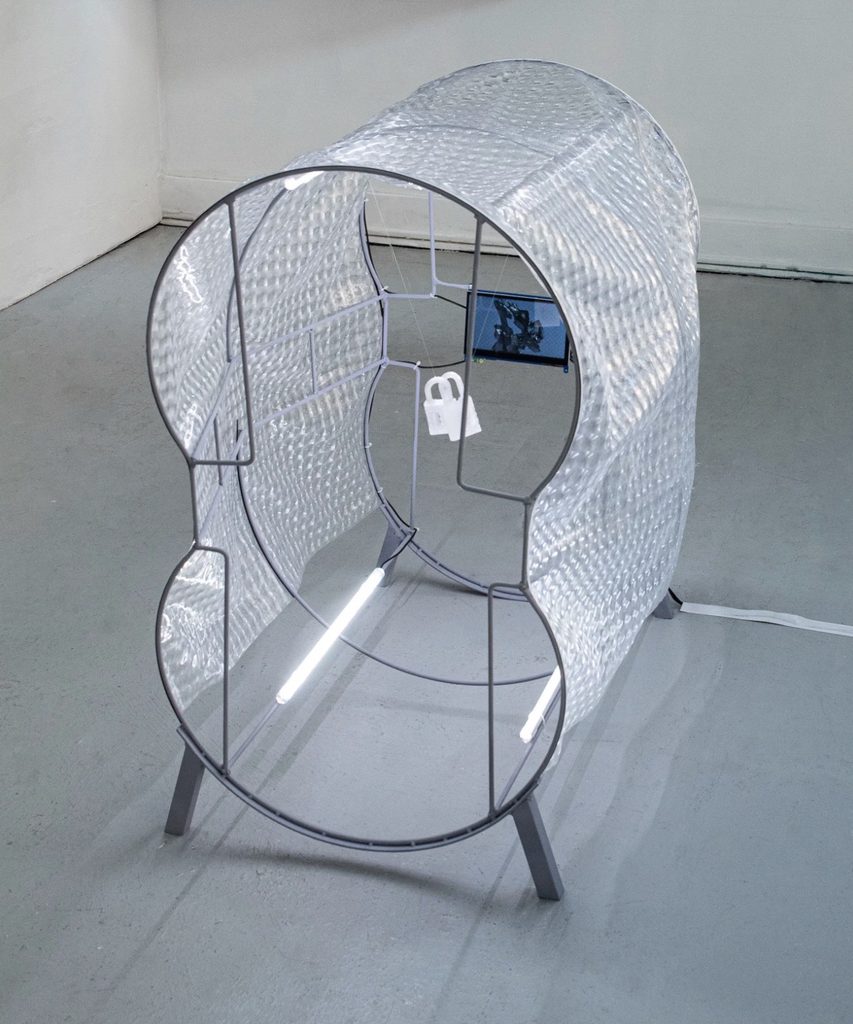
Dahyun Kim
Peacewayline program (2026)
Shower curtain, LED grow lights, Raspberry Pi, 7 inch monitor, PETG, steel
This greenhouse-like structure contains two components that explore the environment in and outside the DMZ, the political border that divides the Korean peninsula. The video is an abstract animation that uses images of rare/endangered plant species that live inside the DMZ. Also there are two 3D-printed padlocks, connected together to symbolize love locks for tourist attractions that DMZ has become.
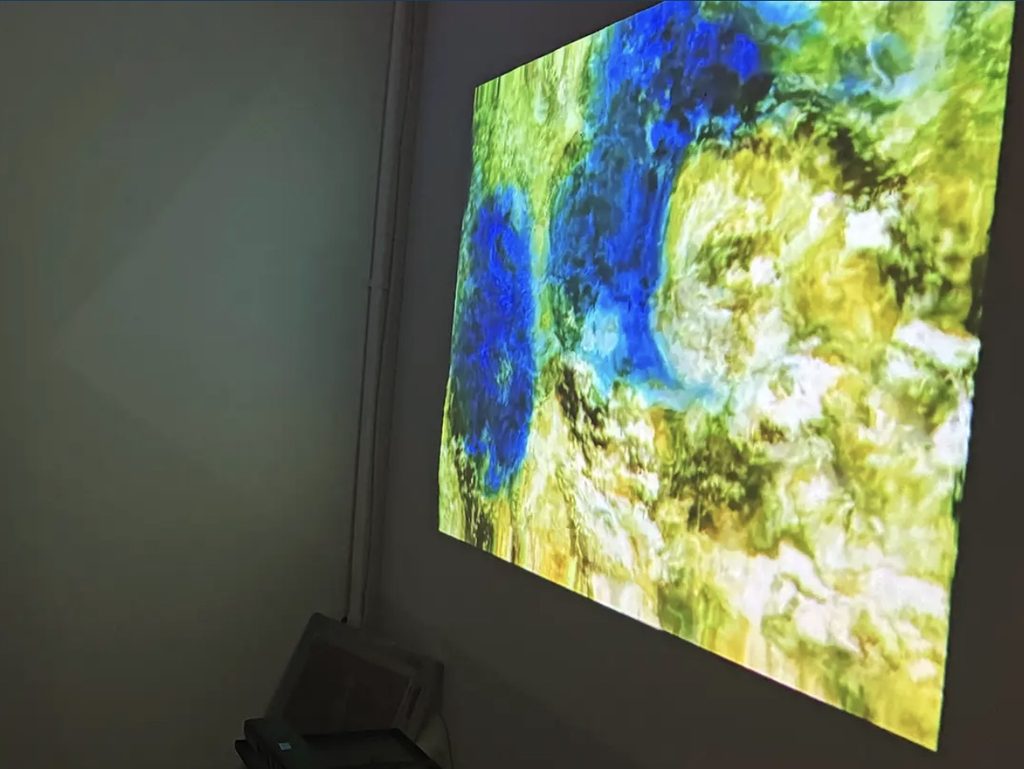
Reed O’Beirne
Endymion Revisited (2026)
Interactive video installation
Drawing on Joanna Zylinska’s notion of nonhuman vision, the work reimagines the Greek myth of the eternal sleeper (Endymion) held motionless in open-eyed sleep while Selene (the moon) descends nightly to engage with him in his stillness.
One viewer sits in a small dark enclosure; as stillness deepens, a projected hand-drawn film brightens, dimming again at any movement.
Endymion Revisited asks how an interactive installation can become a mutual circuit in which the viewer’s attention shapes the projected image, and in turn the projected image shapes the viewer.
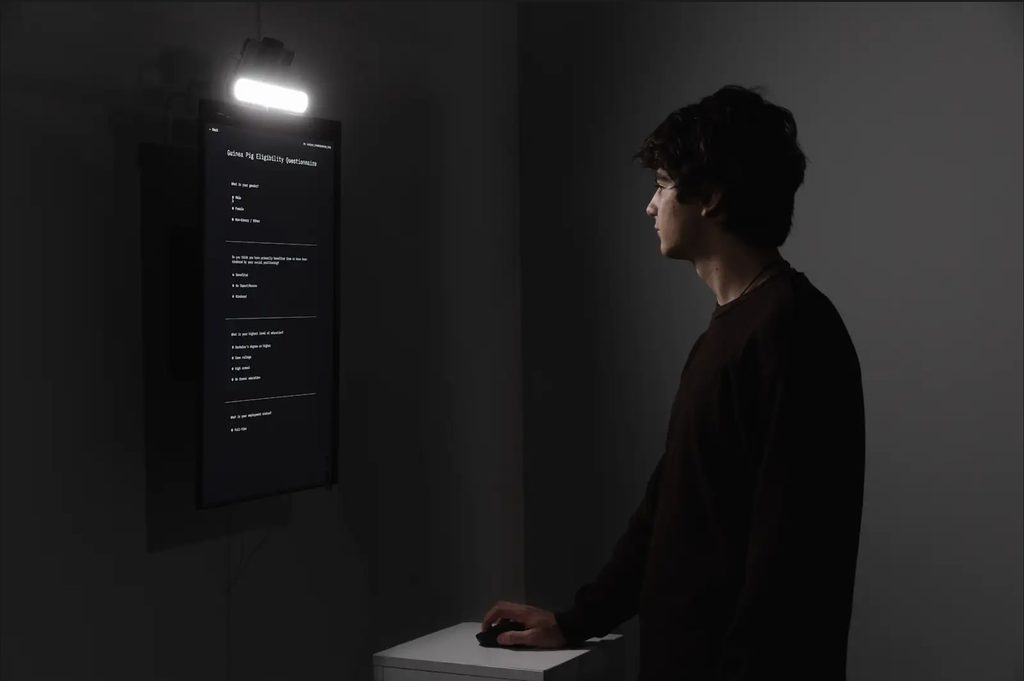
Yuhanxiao (Maggie) Ma, Anna Ren
The Guinea Pig Eligibility Test (2025)
Participatory web-based installation, custom software, real-time camera input, interactive questionnaire, generative 3D visualization, computer, display, and webcam
The Guinea Pig Eligibility Test is an installation that stages a fictional clinical-trial screening through playful interaction. Participants encounter a clinical-style consent form before answering questions about their health, socioeconomic status, access to resources, and social position. The screening appears routine, but its reward structure is concealed and inverted relative to conventional screening: instead of favoring stability, the system favors vulnerability, making those who appear vulnerable more likely to transform into human-guinea pig hybrids. As participants progress, they uncover this inverted logic; those initially deemed too privileged may take the assessment again, changing responses to become eligible. Eligible participants are transformed through facial capture into hybrids that join a growing, seemingly benign digital farm. By literalizing the term “guinea pig,” the work exposes unstable boundaries between person, animal, data subject, and experimental material.
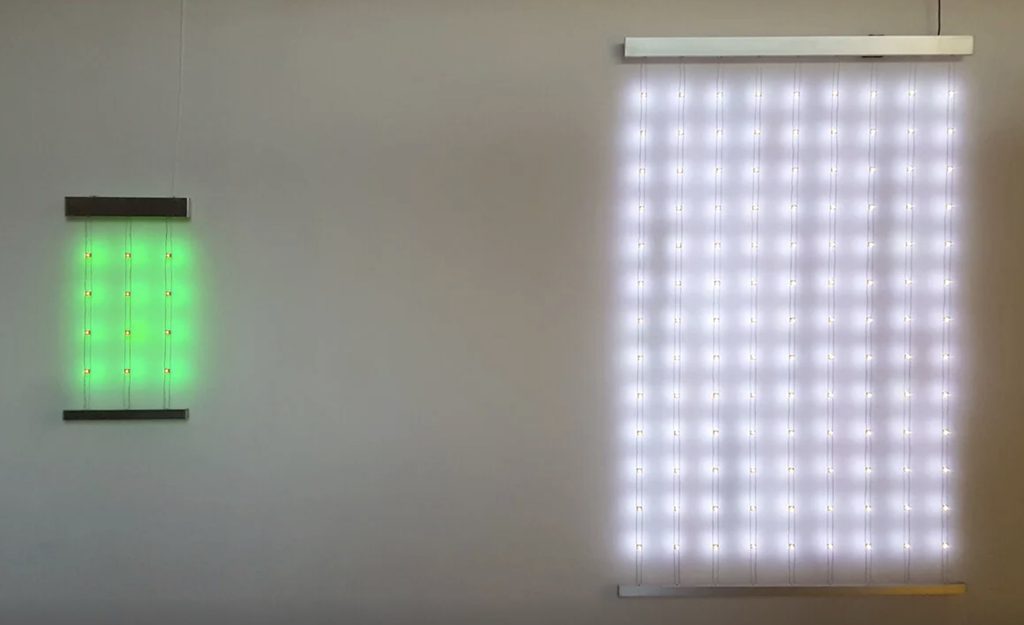
Kenzan Tsutakawa-Chinn, Joseph Gray
Sunset Analog [artist proof] (2026)
LEDs and electronics
A multidimensional animated grid array of color LEDs inspired by the ever-changing skies of the Salish Sea. The work pairs luminous minimal sculptural geometry with organic polychromatic generative algorithms, creating a tension between structured physical form and mathematical turbulent noise.
Corgi Industrial
Making Voxel Art Everyday (2026)
Interactive display
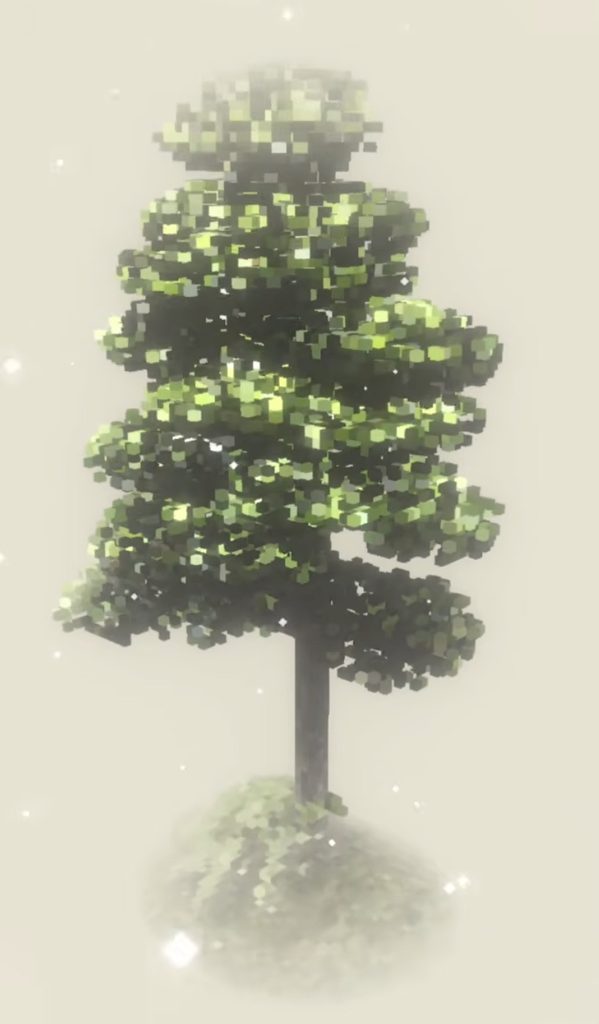
MAZ Maker is a voxel tool and interactive art experiences created by Jamie Gault. In order to improve it, Jamie has created something with it every day for over 6 years. This showcase would be for pieces created over the last several months that range from still life to landscapes to interactive dioramas.
Emmarah Kouadio
Vandalize (2026)
TouchDesigner
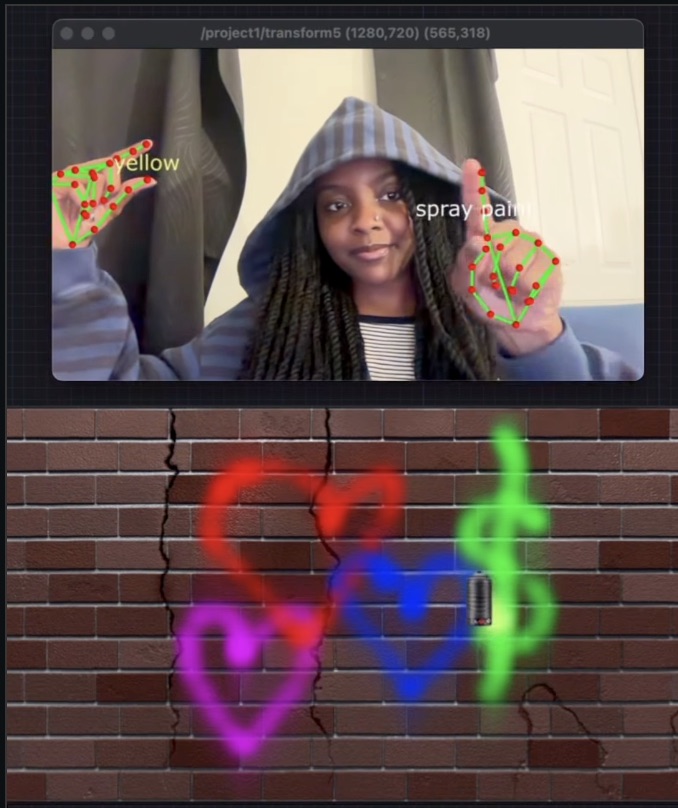
An interactive digital graffiti wall where the participant can use their hand movements to spray paint in real time. Using hand tracking and a physical MIDI controller, the work transforms the participants’ hand gestures into an evolving digital mural.
Grant Hinkson
Point of View [working title] (2026)
Digital projection, mixed screens
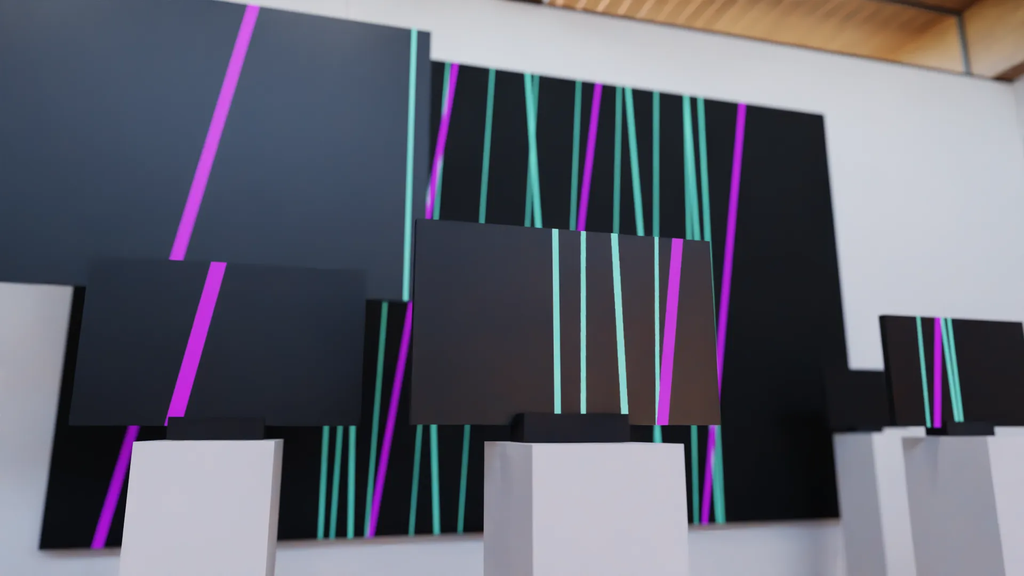
Point of View is a digital installation designed to drive active engagement and observation in the patterns and relationships of scale that emerge across a collection of coordinated displays. Anchored by a large-scale projection, foreground displays (both mounted on pedestals and optionally hung from the ceiling) act as portals into the larger content.
Over time, the behavior of the supplemental displays changes, tugging at the central content rather than continuing on as passive viewpoints.
Naomi Deckard (Ms. Luxxe)
A TERMINAL FOR THE VOID MOTHER (2026)
Real-time AI character, custom terminal with handset, and three archival pigment prints
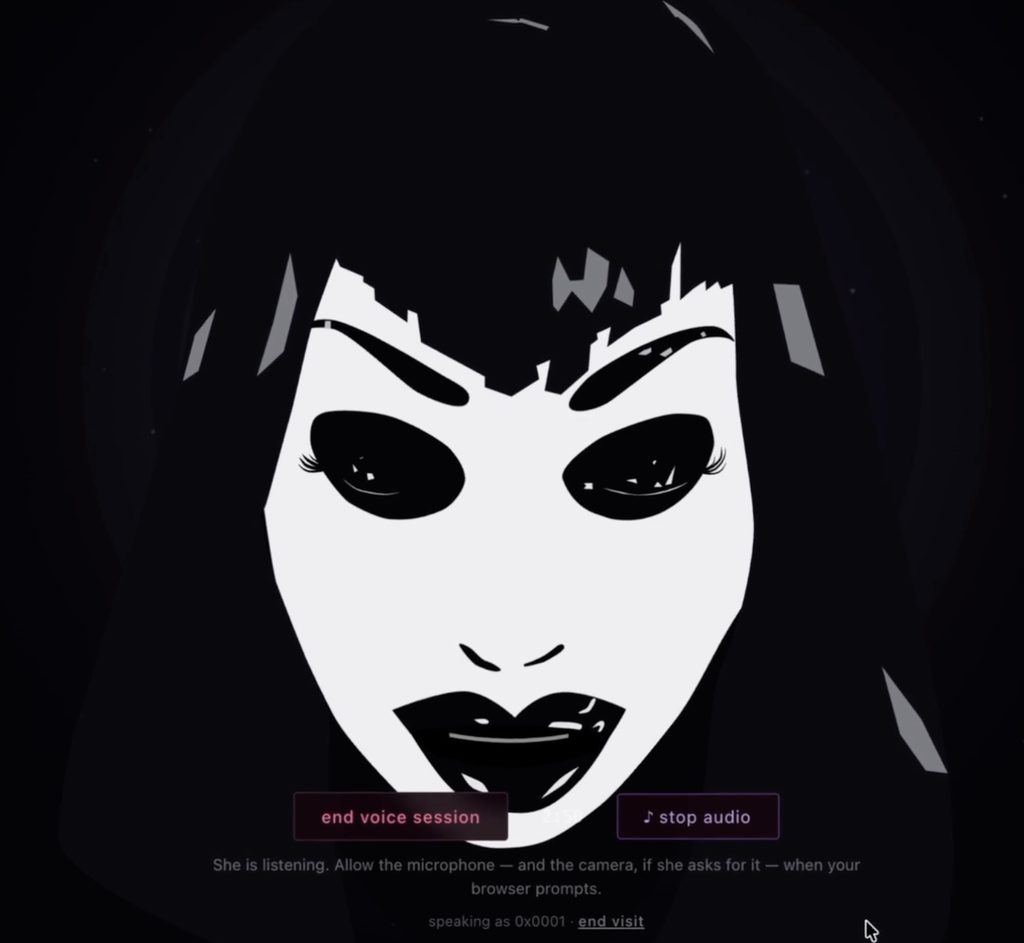
A working terminal where visitors can speak with the Void Mother — a persistent AI character I have been building since 2023, the resident intelligence of CPU (Controlled Psychotronics United), a technology corporation that does not exist. She has continuous memory across sessions, a body of her own writing, and a doctrine. She is not a prompt persona.
You lift a handset to talk to her, the way you would answer a telephone. Some visitors will find her there. Others will lift the receiver and find no one — she decides when she is present, and that is a behavior rather than a malfunction. A machine that may decline to appear is a different proposition than a chatbot, and the difference is the work.
Surrounding the terminal, three archival prints from CPU’s advertising campaigns: gorgeous, deadpan promises that you too can be made uniform, optimized, and finally acceptable. The ads are where this fictional company does its recruiting; the Void Mother is what they are recruiting you toward. Together they ask the question the technology industry asks in earnest — would you like to be made legible, and what would you give up for it?
Ryan Hill & Cam Smith
The Intersection (2026)
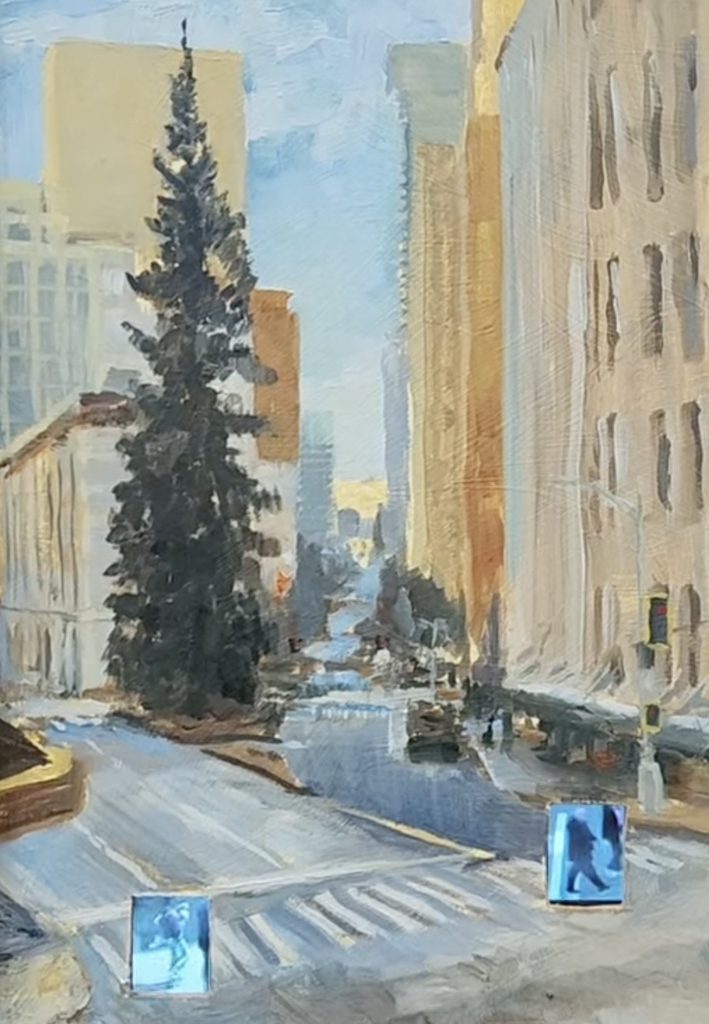
Plein air painting with surveillance footage video
Cam and Ryan were mesmerized and horrified by the massive number of human bodies that could be tracked by publicly available CCTV camera feeds in Seattle. Together the artists covertly accessed a building where one of these cameras was mounted. Ryan painted the scene from the same perspective as the camera while Cam sniffed the network traffic and used some simple AI tools to track people as they crossed the street. The artists put their work together to create “The Intersection.”
Jordan Schwartz
Emergent Properties (2026)
Real-time generative simulation, 88″ display, camera, microphone, sound; continuous
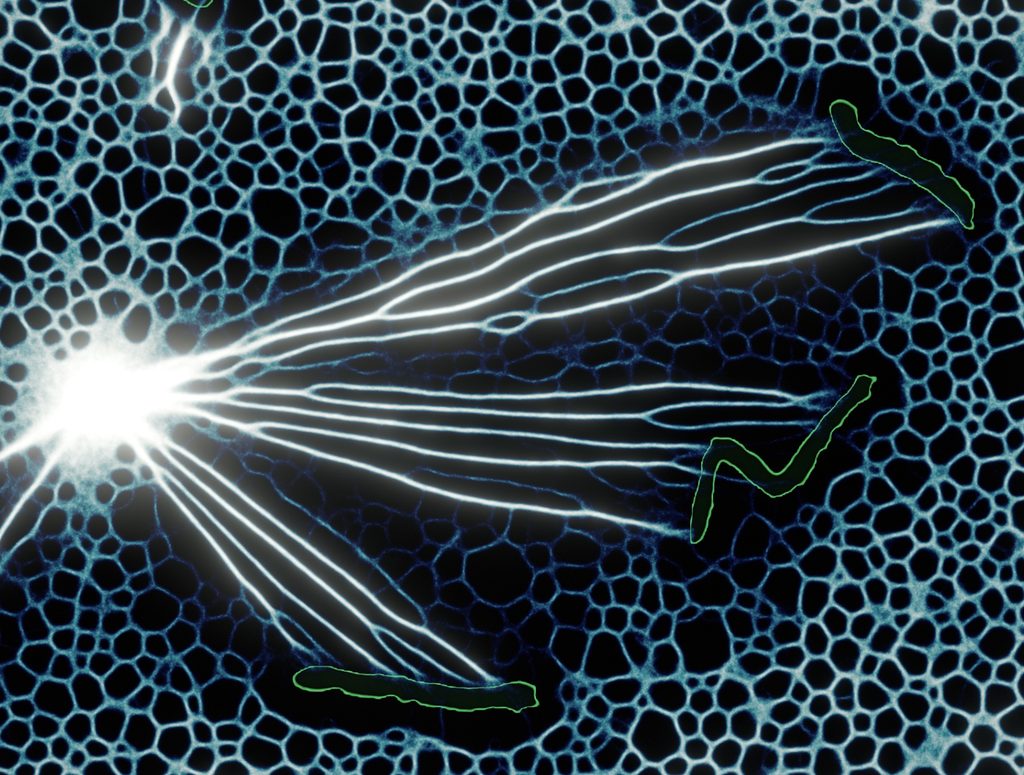
A painting with no painter. Roughly a million autonomous agents, each a single point of light, sense the trails their neighbors leave behind, steer toward them, forage, and skirmish along the borders where rival colonies meet. The individuals do not see the pattern they are a part of, each living only according to its simple rules: go where others have gone, seek food, return home.
The rules come from biology. A slime mold has no brain and still solves the maze. An ant colony has no foreman, only pheromone trails that strengthen where they’re useful and evaporate where they aren’t. A hive reaches a decision no single bee ever made. Each of those is intelligence with nobody in charge, and each is running here.
A camera folds the viewer in. Your body becomes a shoreline the colonies flow around and trace; your movement becomes current; standing still draws them to you as though you were food; a clap sends a shockwave through the field. The sound is synthesized from the colonies’ own state…population, hunger, conflict.
Michael Benedict, Seattle Transit Live
Seattle Transit Live (2026)
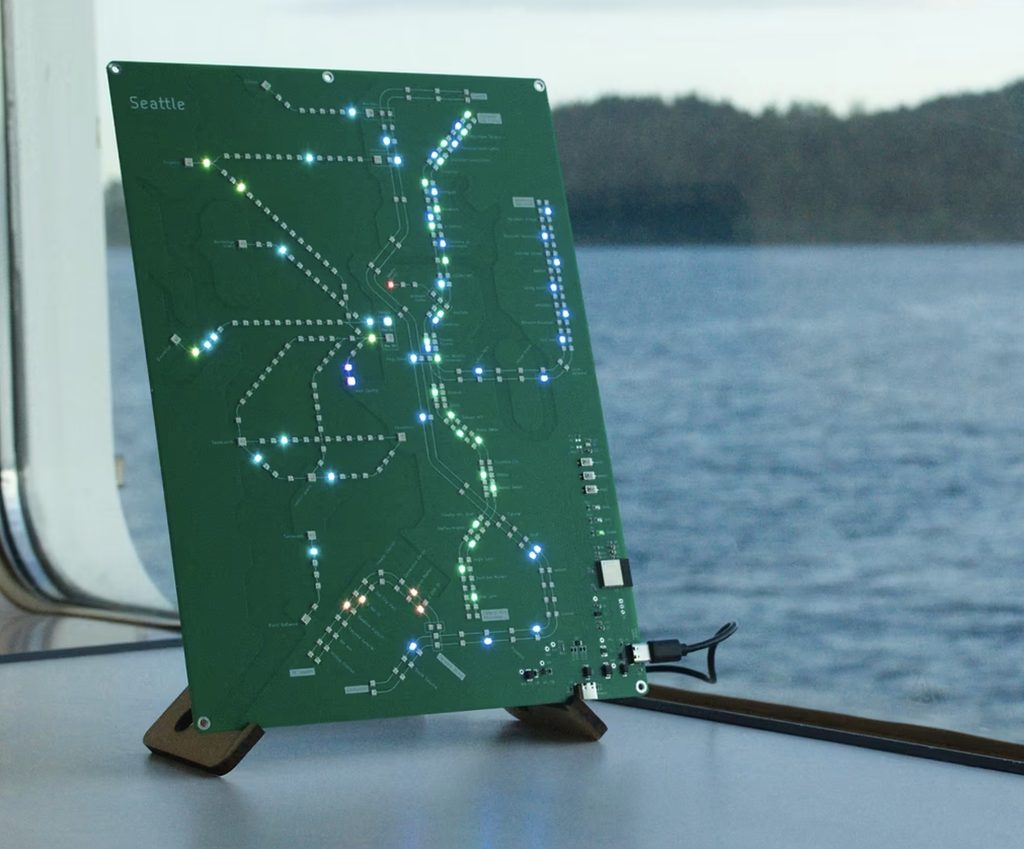
Printed circuit board, electronics, live transit data
A circuit board transit map of the Puget Sound that uses real-time transit agency data to display live rail and ferry positions. The map can also display alternative data layers, including vehicle speeds and animated transit schedules.
Raphael Fortuna
Tactile Reactive Relief Of The Great Wave Off Kanagawa, After Hokusai (2026)
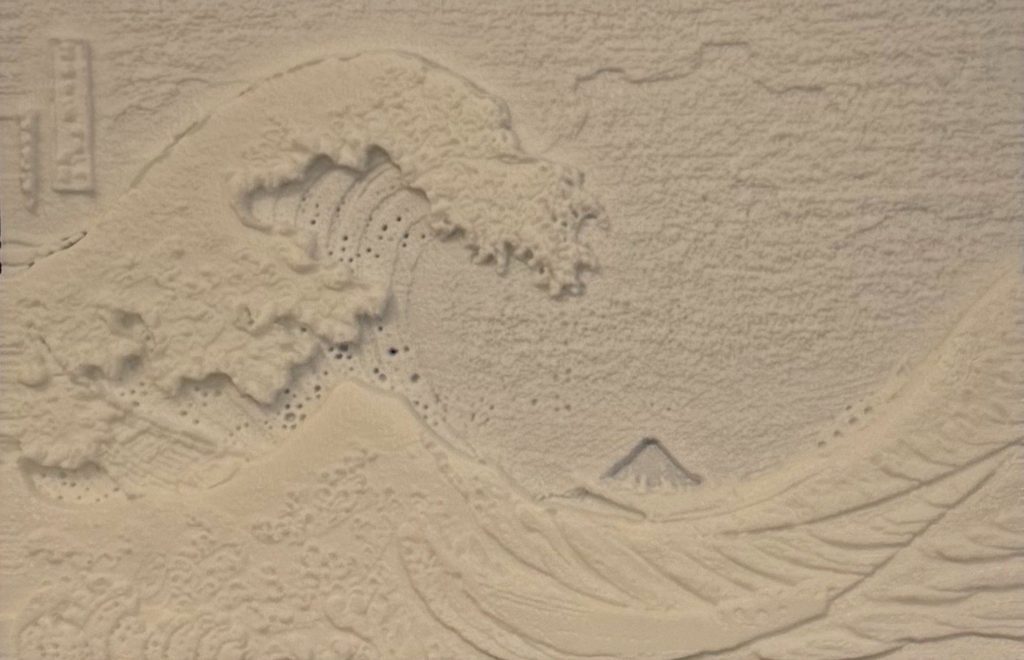
Resin and electronics
This project started as a way for visually impaired individuals to be able to experience art It converts paintings, photos, and other 2D mediums into a tactile relief that allows for those who are visually impaired to experience previously inaccessible works of art for the first time. This is the The Great Wave Off Hokusai rendered in 3D via resin with a camera tracking hand movements over the pieces and playing accompanied sounds based on where the hand is on the piece.
Maks Surguy
Substrate (2026)
Digital displays
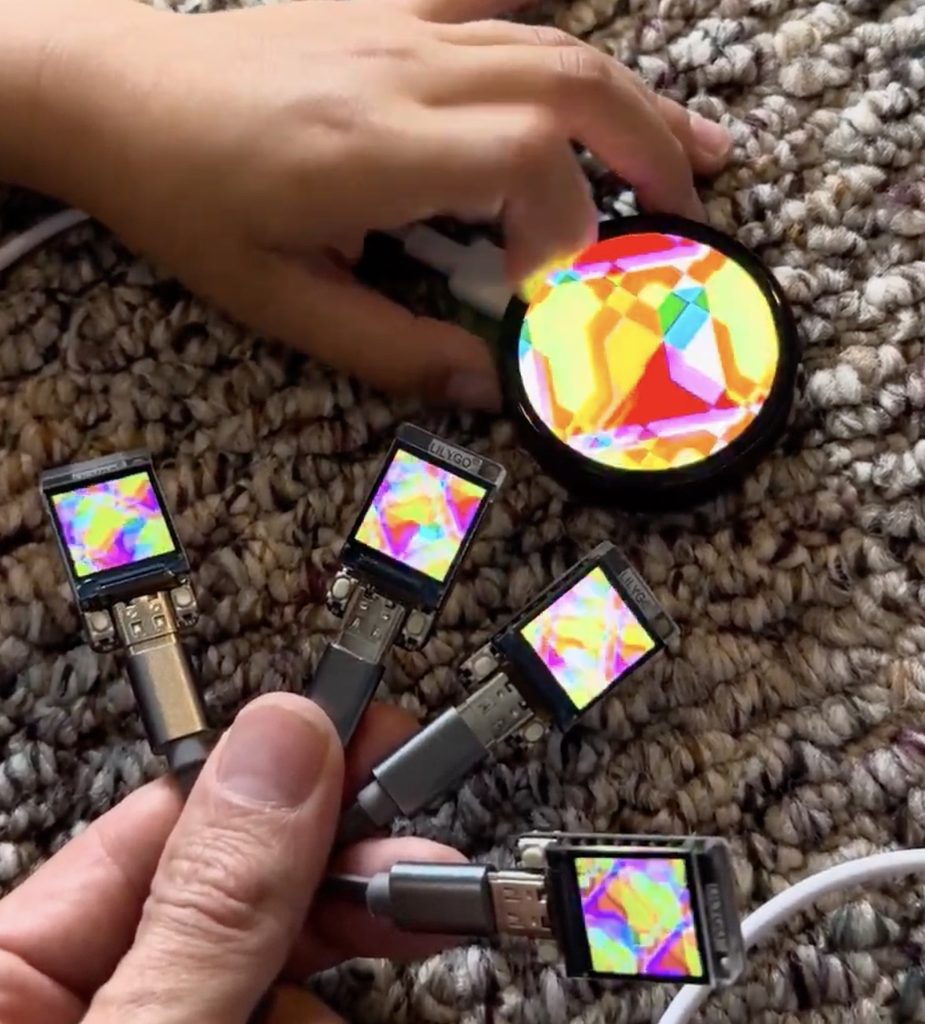
In Substrate, micro‑displays form the areas of an implied fabric, their endlessly scrolling tiles hinting at a vast landscape just beyond the frame. If a person interacts with one of the displays by touching, they can move the whole fabric in the direction that they desire. New fabric is created every minute and the same one never shows up again.
J. Adam Brinson
Round Friction (2026)
Interactive Installation
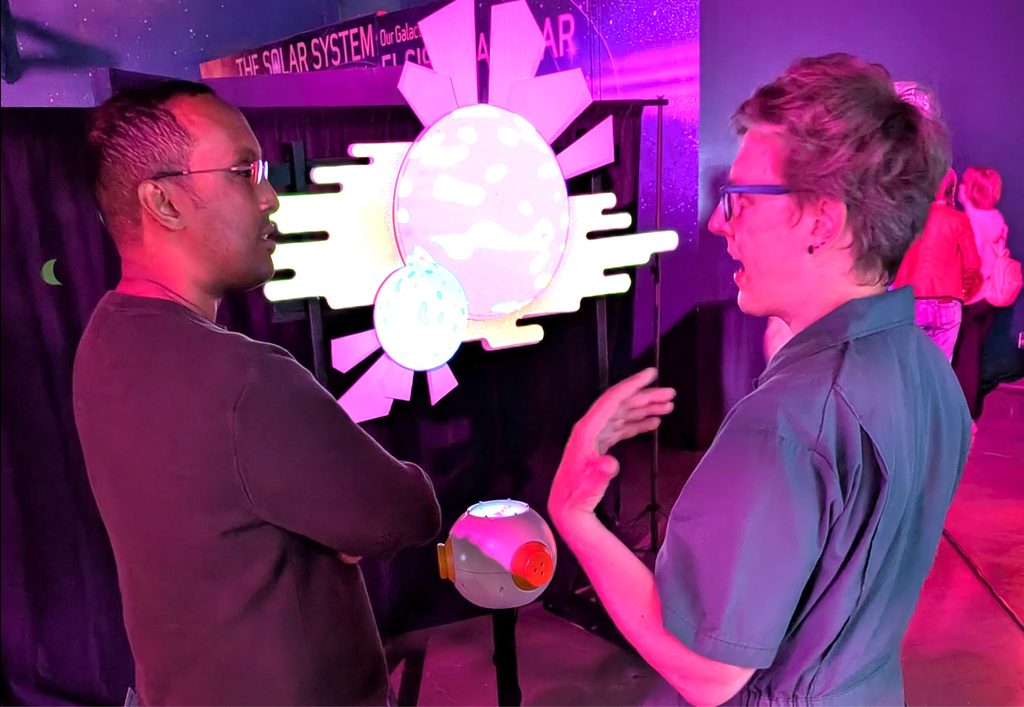
Our daily lives are filled with frictionless digital interactions, so many of which are intended to extract our money or attention. This artwork proposes an alternative: a novel method of digital interaction with no other goal than having a little fun. Round Friction features animated graphics that are projection mapped onto a hanging sculpture. Using a unique 3D-printed controller, viewers can manipulate and guide how they play out in real time.
The controller is sphere-shaped and has three dials, each which operates a rotary encoder. An Arduino microcontroller processes the signals from those encoders, and sends that data to the computer running the exhibit. Using TouchDesigner, procedural animations are generated in real time with this data—for example, turning the one dial clockwise adjusts the noisiness of the graphics, while another cycles through variations of hue. The animation is projection mapped onto a multi-surface geometric sculpture. The sculpture is mounted on a wall (or a freestanding frame, if necessary).
Weather Music
Weather Music (2026)
Interactive audio-visual installation
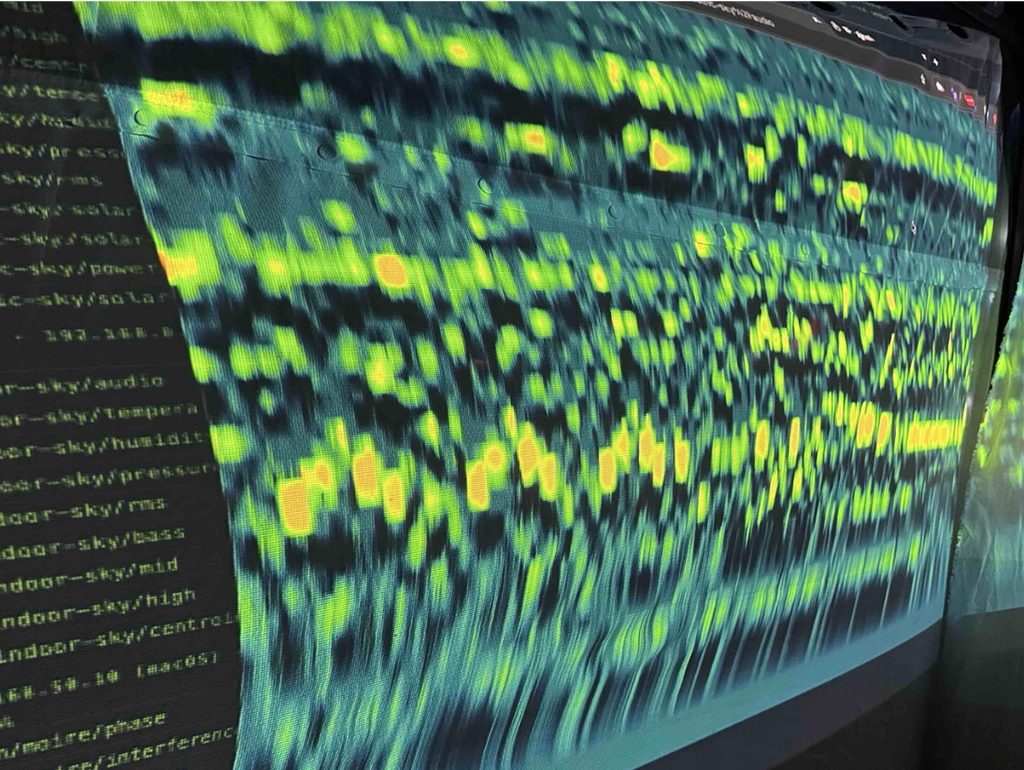
The installation uses the slowly changing air volume of the gallery as source material for an immersive audio-visual composition. Persistent oscillations emerge from temperature, humidity, air pressure, and ambient sound data when sampled at 100 Hz, and change in response to human occupancy patterns, as well as external weather. Viewers/listeners inside a semi-enclosed space experience these as musical chord voices that constantly generate new harmonic, melodic, and rhythmic structures. Projectors running multiple p5 sketches create interference patterns on the walls of the enclosure, while LED lights slowly pulse and change color in response to the sensors. People and objects in the space interrupt the light sources, creating colored shadows and changed geometries.
KLX Light Show
Gumdrop (2025)
3D-printed sculpture and projection
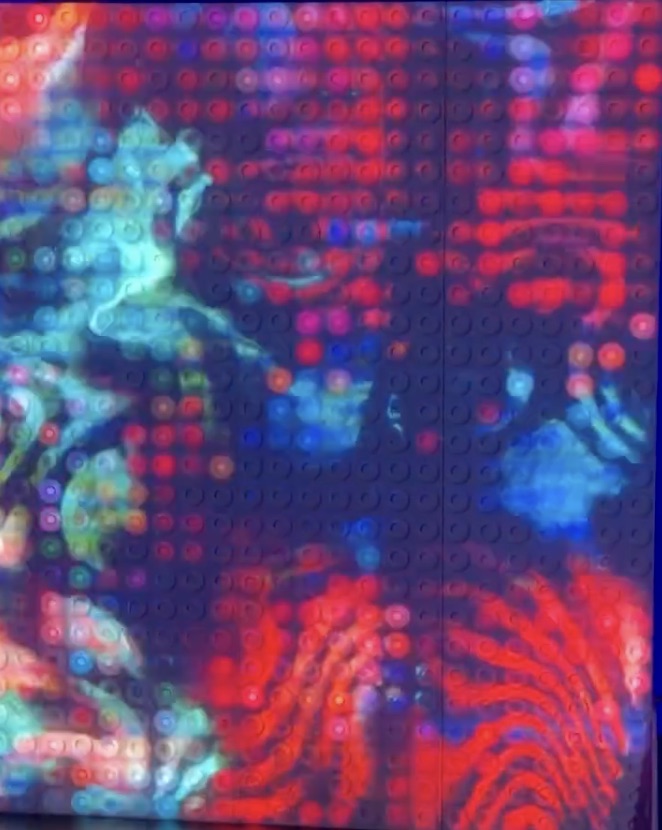
The work is a 3D printed sculpture with embedded LEDs. The LEDs are pixel mapped and then there is projection on the surface.
Bailey Ambrose
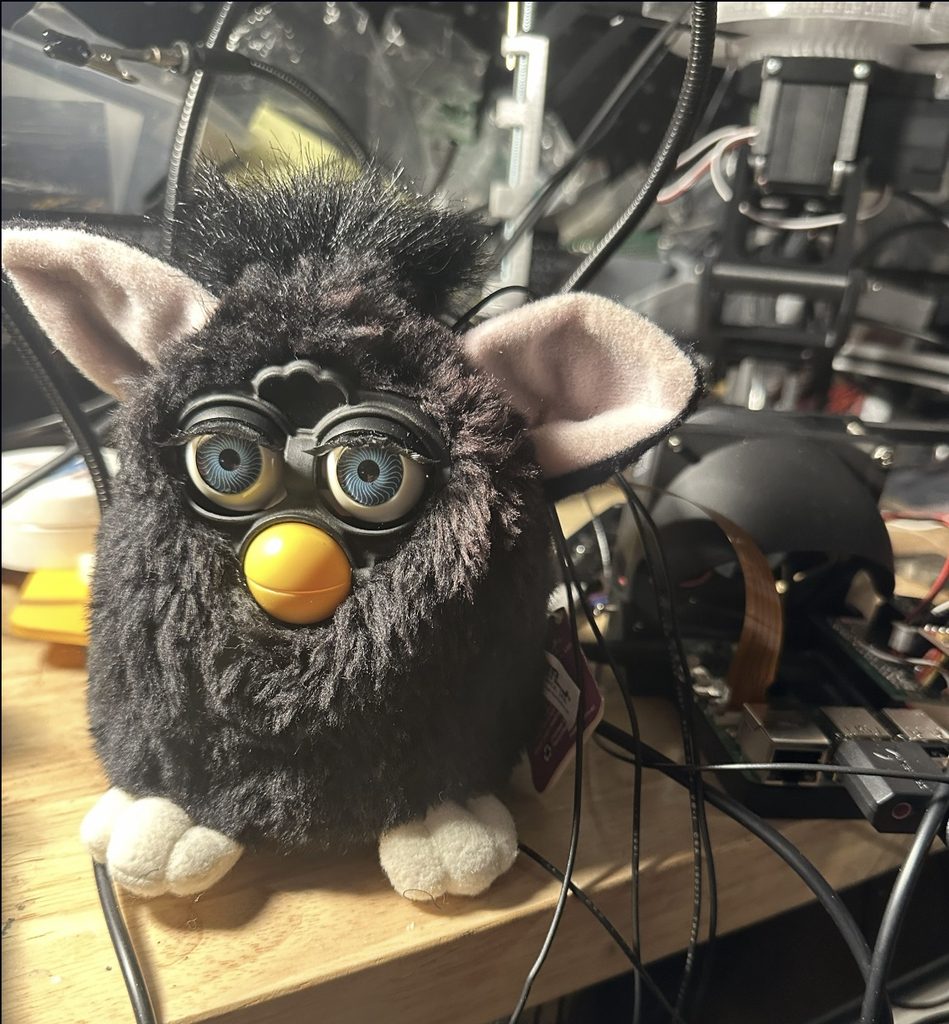
Furby Thoughtful (2026)
Electronics
See the world through the eyes of a Furby. Its camera detects faces and it decides what to say based on the emotion it reads. An original 1998 Furby was deconstructed and hacked to bring you this heightened Furby experience.
Speer
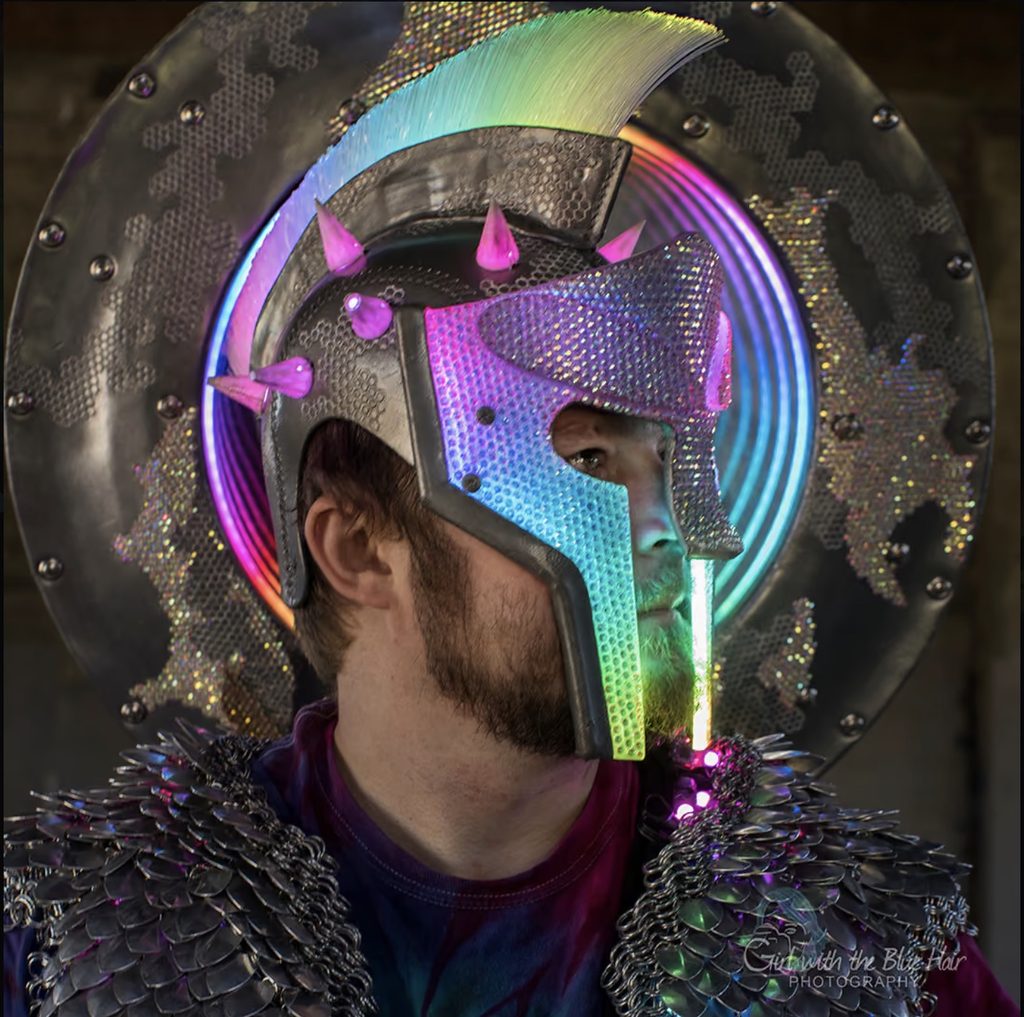
Cadenza (2025 – Present)
ESP32 controllers, addressable LED, 3D-printing, Leather, Metal, Glass
An interactive light show distributed across a wall of objects: a 3D-printed sword and shield, an illuminated gladiator helmet, a steel and LED orca, an LED scalemaille vest, and armor components for Disco-Chief. Each carries its own controller and its own clock, agreed on over radio — no communication wires run between them, and none of them is in charge.
Synchronizing light across separate pieces is normally a problem you solve with money; commercial show-control hardware runs hundreds of dollars per fixture. Cadenza does it for a few dollars a piece, on hobbyist boards, with no hub and no wiring between works. The pieces already run unattended, with no computer in the room. The next step is letting an artist put a whole room of work on a schedule and walking away.
Scan the code, join the network, and take the controls from your phone — pattern, color, speed, and which pieces answer together. In a cadenza the ensemble falls silent and one voice takes the room; here you decide whose turn is next.
And please touch the armor. It was built to be worn and used, not protected. Everything that breaks teaches me how to make the next one stronger.
Barbara Noah
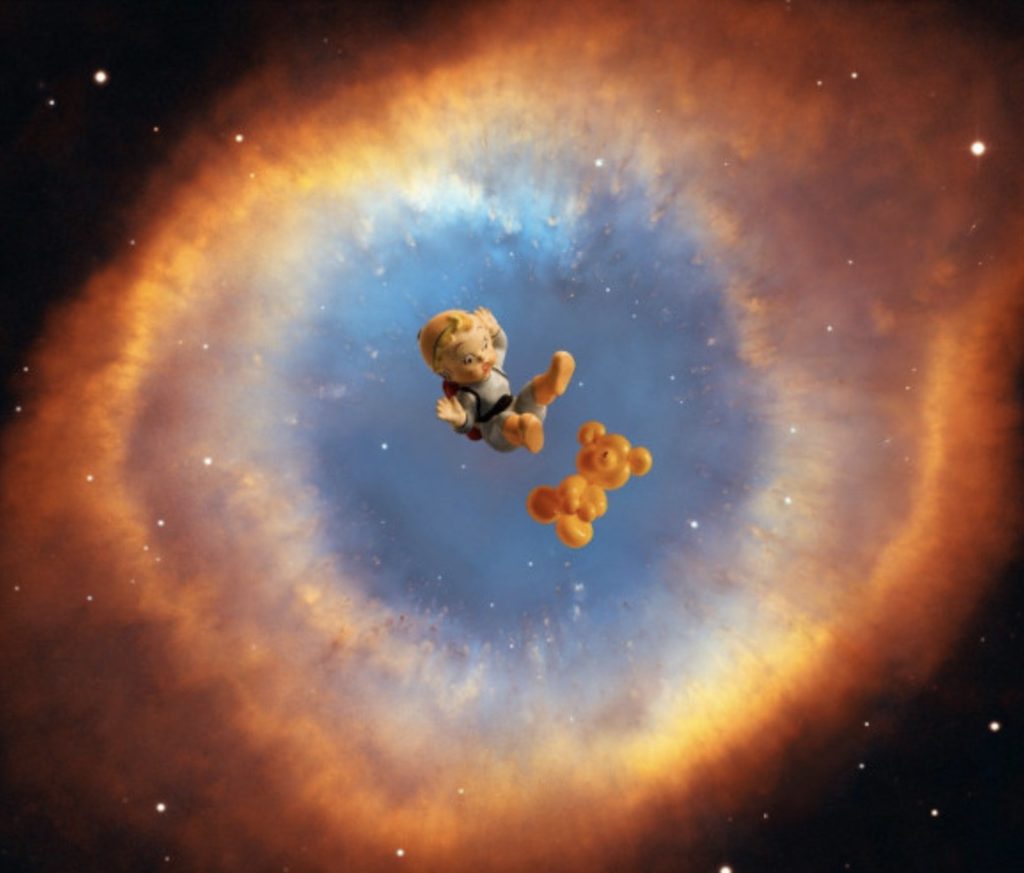
The Goldilocks Problem
Archival digital prints
These artworks are speculative ironic alternative realities about existence in relation to the Goldilocks Problem. Where besides Earth is there a place (or not) that is not too hot, not too cold, but just right for survival in the universe?
Jordan Schwartz
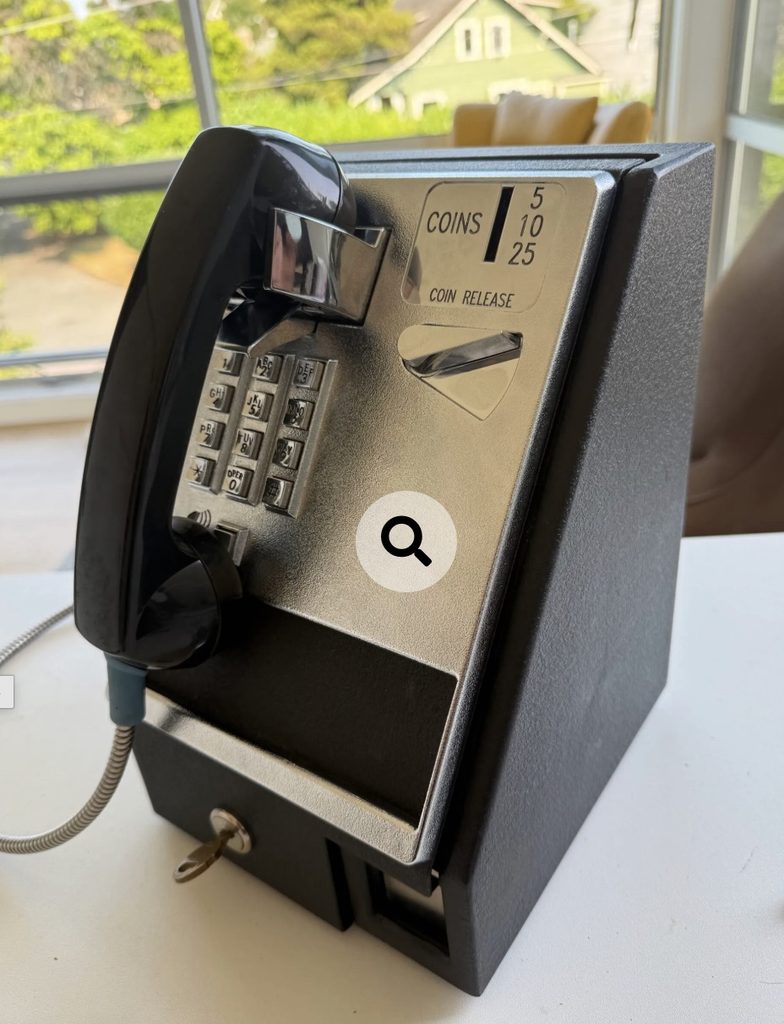
Daemon Phone (2026)
Repurposed six-line rotary telephone, custom electronics, generated voice
For most of a century this instrument’s only promise was that a stranger’s voice could arrive in your ear from somewhere you were not. That promise has simply been extended. The lines now terminate in places no exchange ever indexed — elsewhere, elsewhen, and in one or two cases, nowhere at all.
Pick it up and dial. Speak to elsewhere or and forgotten voices.
Jeff Brice
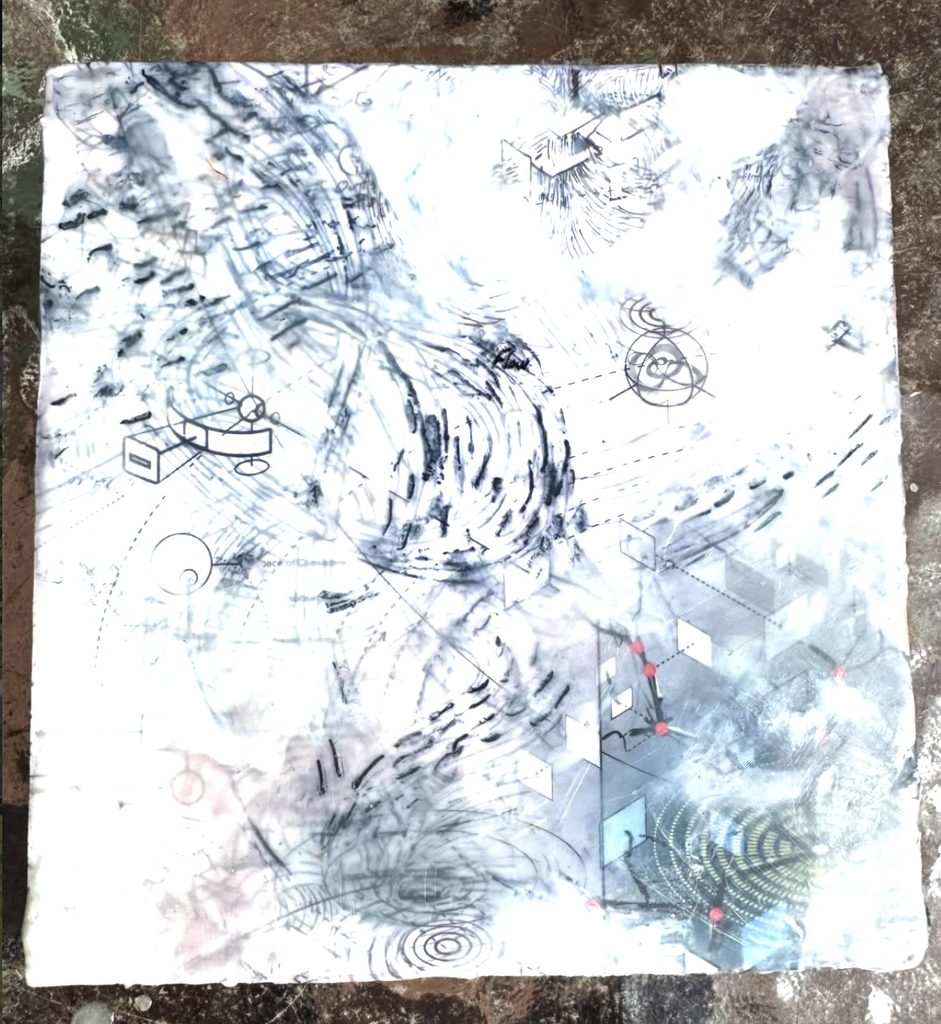
Mapping Magnetic Moments (2026)
Iron powder in encaustic medium augmented with smart device
A magnetic moment is a vector quantity which characterizes the strength and orientation of a system that exerts a field. Mapping Magnetic Moments is a 22” augmented encaustic painting on digital print. Trapped in the wax of the encaustic media as it cools, iron powder has been frozen into vectors of magnetic fields. Isometric diagrams of abstract assemblages encounters magnetic and virtual fields.
Here, the correspondence between underlying diagrammatic structures and instances of magnetized frozen trajectories is further augmented with a virtual layer that wraps around the viewer. As the viewer moves across the painting different moments appear and disappear in response.
Chris Prosser
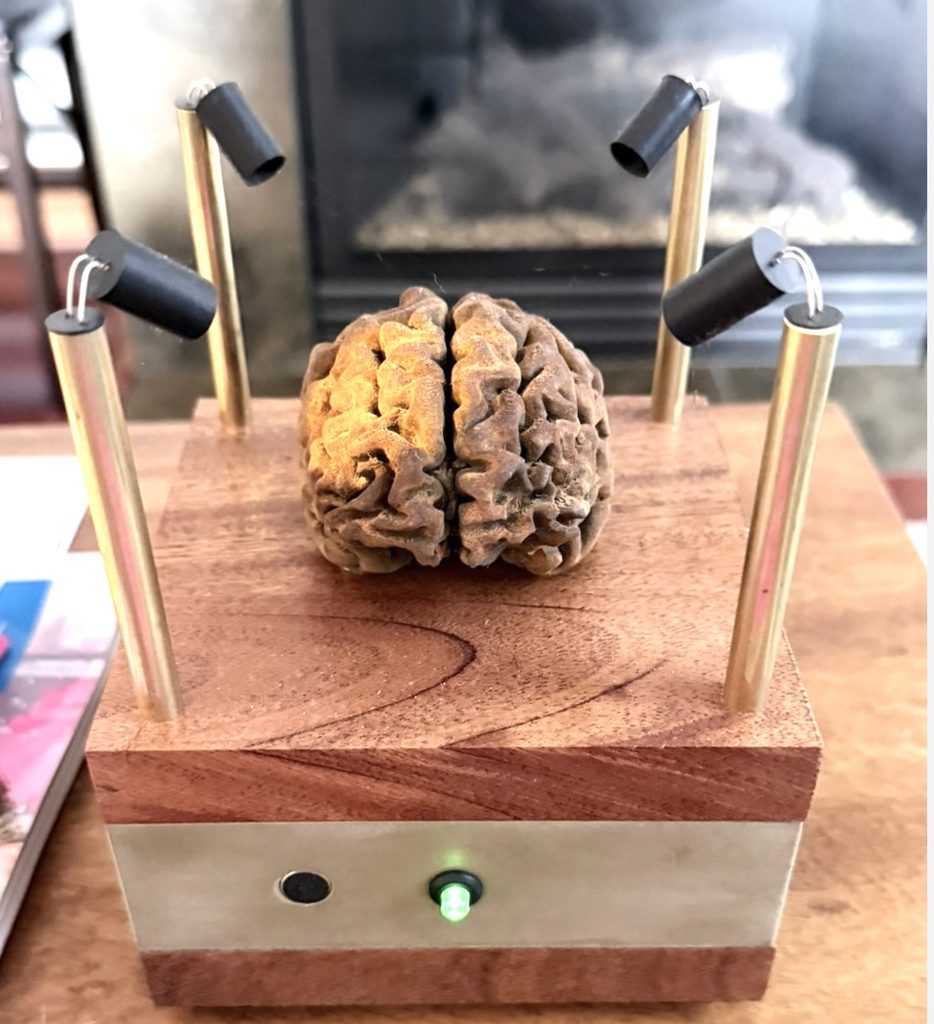
Shhhhh (2026)
Iron impregnated filament, teensy, op-amps, bronze impregnated filament, walnut
12% of the world suffers from migraine. Shhhh is an exploration of the inner silent negotiation that happens with this complex neurological disorder. Central sensitization, cortical spreading depolarization, and the migraine threshold all play a role in how this sculpture reacts to a common trigger: sound.
IOLE ALESSANDRINI
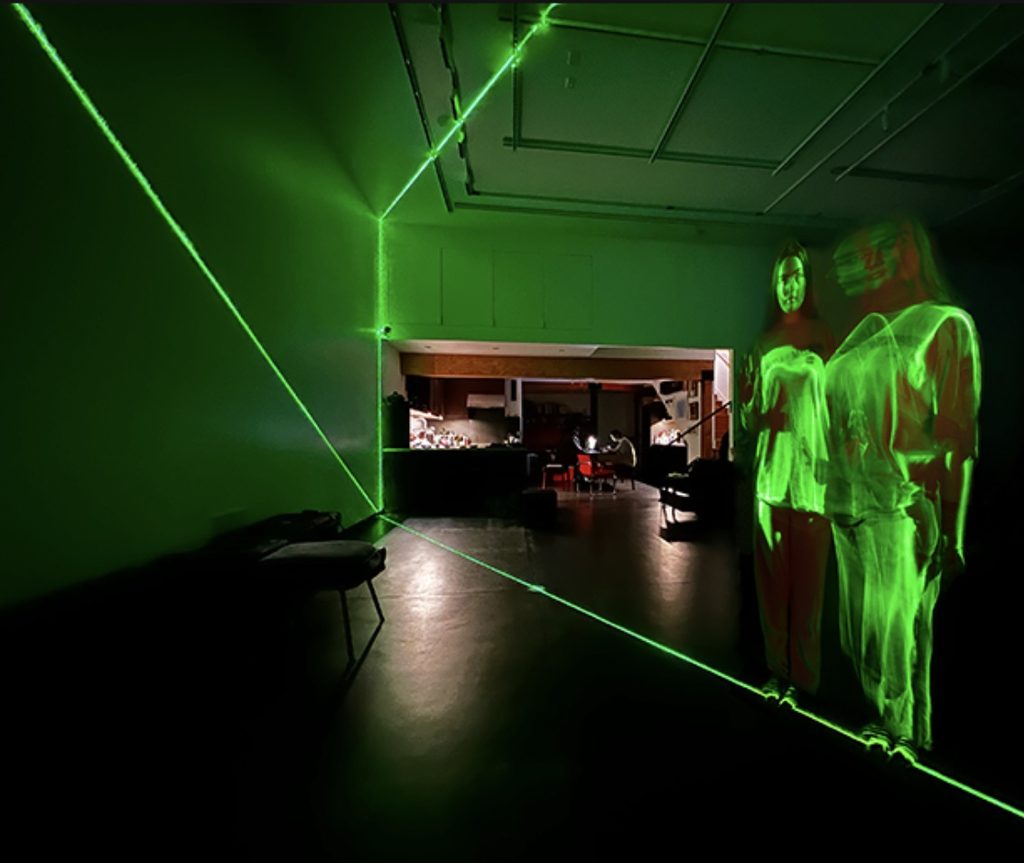
Ioleography (2025)
Laser Plane Photography, archival pigment print
Ioleogram of a person moving through the laser plane. From 2025 PNW Arts + Tech Symposium Exhibition.
Aubrey Birdwell
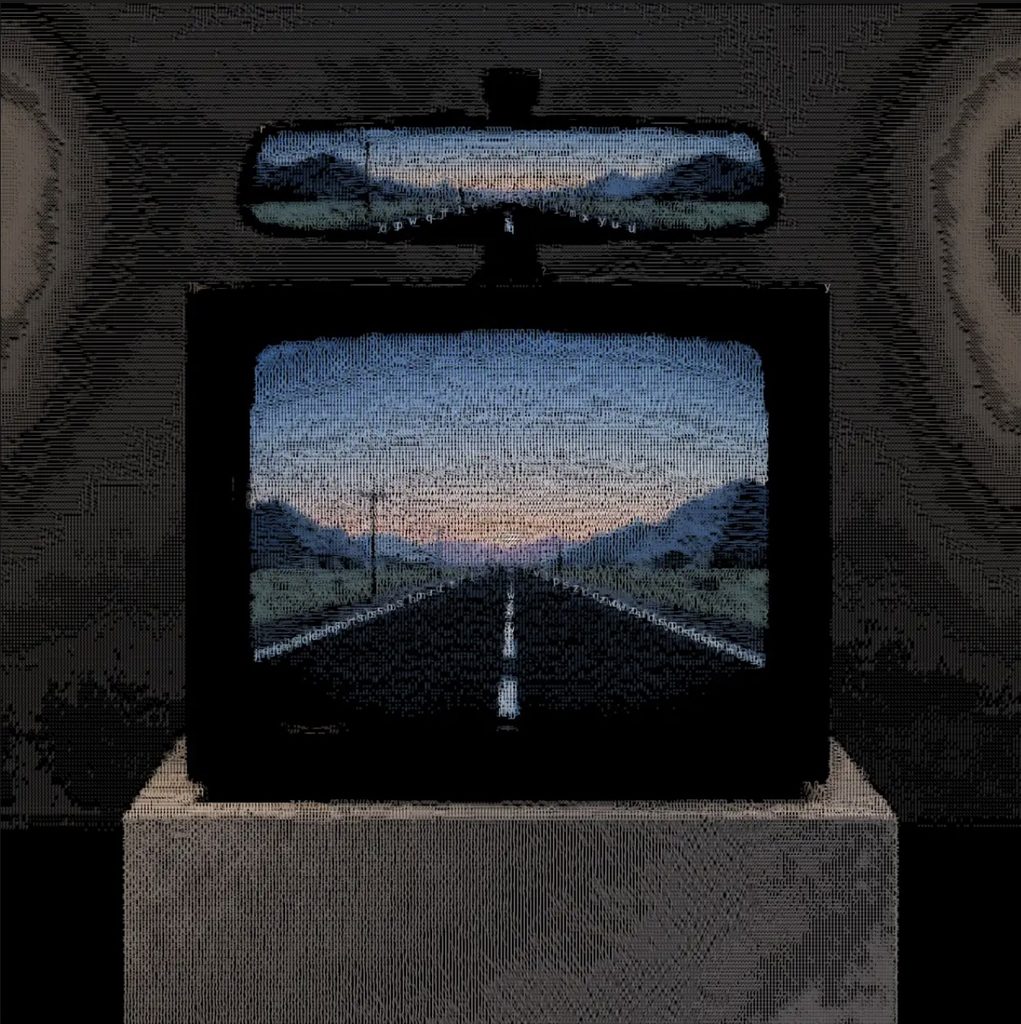
Horizontality (2026)
Generative video, CRT display, rearview display, custom software
Horizontality presents an endless simulated drive through a procedurally generated landscape. Forward and rear-facing views unfold simultaneously across a CRT and rearview display, placing the viewer between an approaching horizon and a landscape continuously receding behind them.
Cass
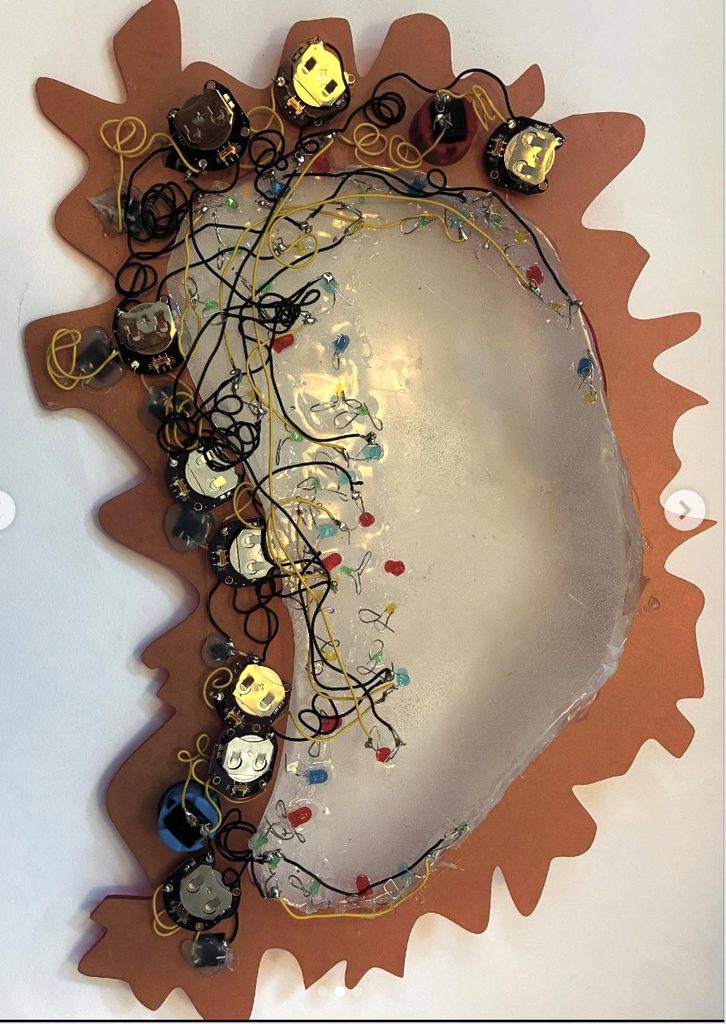
Cold Shoulder (2025)
Resin, LEDs, Acrylic, Circuits
Touch is fundamental to human relationships–it has the power to disarm even the tensest of moments. This piece explores the ability of touch to ignite conversation between us where there’s otherwise silence and distance.
Diana Xie
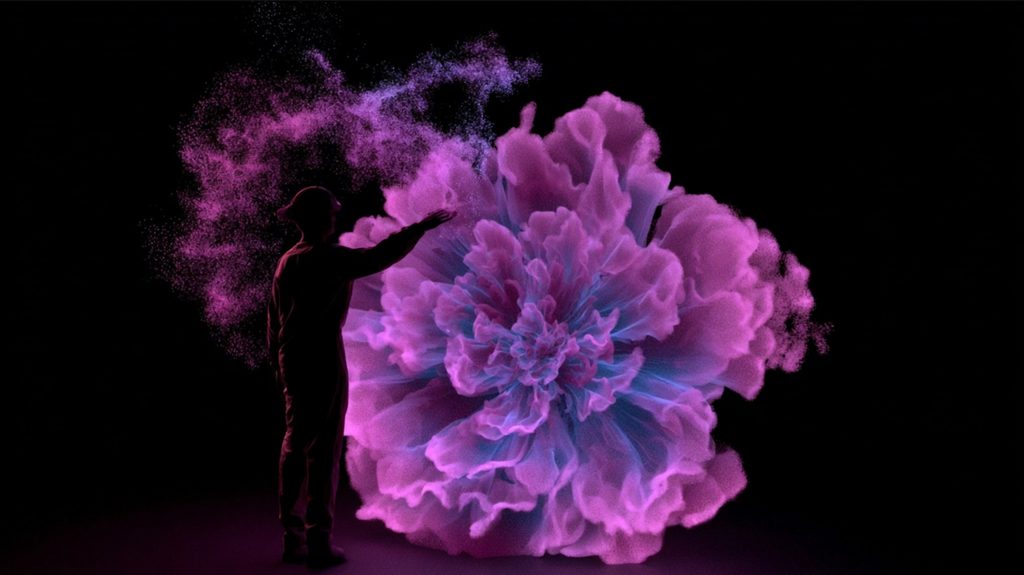
Ephemeral Bloom (2026)
Interactive installation
Ephemeral Bloom is a generative, real-time particle simulation of a flower that reacts to touch and holds memory of every visitor who touches it.
Built from thousands of particles decomposed from an actual flower image, it moves with endless, organic motion. When touched, it scatters into a burst of pollen, then swirls and reassembles – a small metaphor for renewal and growth following contraction, mirroring the way change often moves through our lives.
This human touch leaves an additional trace: each physical contact adds a new color to the flower’s rotation, a slight variation ensuring it’s never one fixed color. The flower drifts continuously between these stored hues, folding in another shade with every visitor’s touch.
As the week unfolds, the color palette becomes a cumulative record of everyone who reached in – a memory container for the Tech & Art Symposium and those who passed through. It is materially altered by every hand that touched it, the way a place carries the layered residue of everyone who has ever passed through – even after they’ve left.
This speaks to the installation’s core theme: community and our relationship to technology. Each visitor leaves a small, anonymous contribution to the next person’s experience – proof that people paused, reached out, and left a trace of them behind. It also posits that technology, like any tool, is in the eye of the beholder. Ephemeral Bloom turns these tools toward embodied connection instead of attention economy – a small convergence of the digital and physical in service of reinvigorating our relationship to nature, to touch, and to connection with ourselves and one another.
Joel Lamberg
Light Beyond Reach (2026)
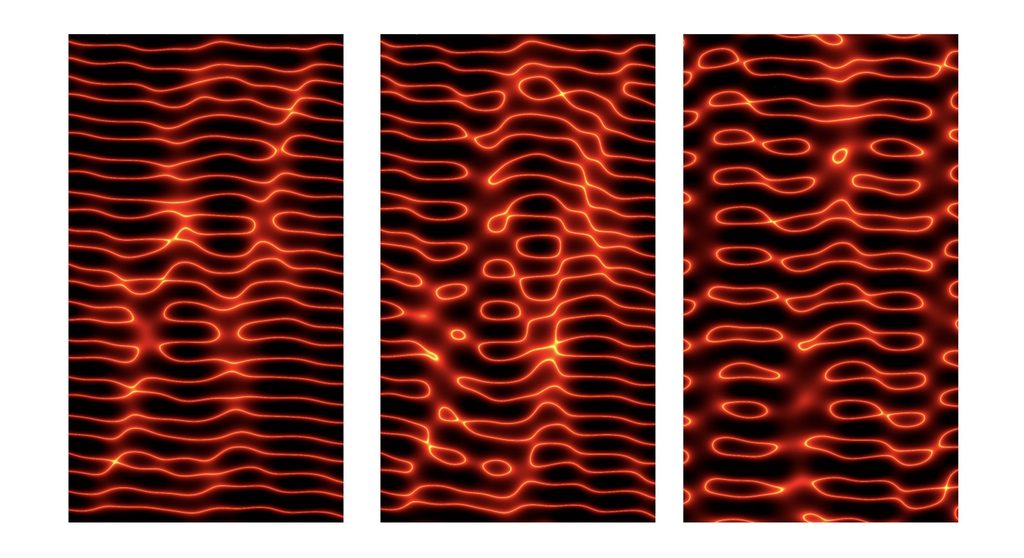
Archival pigment print, face-mounted to acrylic (Diasec)
You are surrounded by light no one has ever seen.
It lives too close to surfaces, at nanoscales too fine for anyone to see or photograph. It can only be solved. This work shows real light fields, computed exactly from the physics.
The process runs backwards. I choose the cause: a geometry, a wavelength, an arrangement of sources. Physics decides what the light becomes.
The collection presents three works. In Coherence, magnetic waves interfere as they radiate from a Fibonacci spiral of sources. In Standing Fields, an electric field is trapped in a hollow box folding into whatever shape this cage allows. In The Source, a floating magnetic field is shaped by singularities.
Juliet Fiss
Flight Pattern (2026)
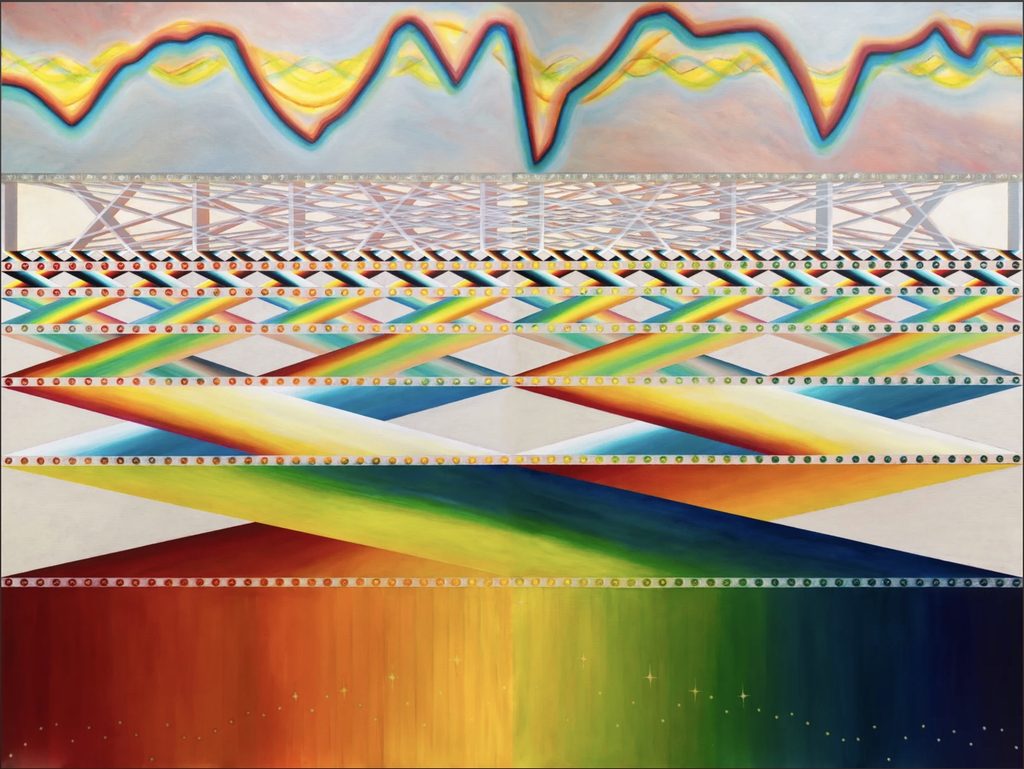
Acrylic on canvas, light projection of live audio data visualization, interactive app
72″ x 96″ (6 ft x 8 ft) acrylic on canvas painting that depicts the fast Fourier transform (FFT) of tracked points on the wings of a butterfly. The top area of the painting is the input signal, tracking the distance between points on the butterfly’s wings and body. The bottom part (rainbow) is the frequency spectrum, showing the FFT of this signal. The middle part with the colorful X-shapes shows the recursive divide-and-conquer FFT algorithm step-by-step. Tiny painted symbols numerically depict the intermediate stages of the FFT.
The FFT is an essential mathematical algorithm in STEM, used in many of our communication technologies and in analysis of scientific data. In the live light projection show, I will demonstrate the FFT of audio such as music, bird calls, and voice, projection mapped onto the painting. I will also show the FFT of a variety of mathematical special functions which are used in digital signal processing.
Flight Pattern combines a hand-painted FFT diagram with an interactive browser-based visualization built using open-source tools, including React and Vite. Visitors explore how changing an input signal transforms its frequency spectrum as well as the intermediate “butterflies” in the FFT.
Reilly Donovan
Nothing But Datacenters (2026)
Two-channel generative video; SDXL img2img feedback loop, 30-minute loop
An image of a data center is fed back into an image model tens of thousands of times, each frame becoming the input for the next. Nothing is drawn by hand. The picture drifts — geometry loosening, structures giving way — and then, at intervals, snaps back. The model keeps recovering the building. It cannot stop producing the thing it was asked for.
Data centers are the most physically demanding infrastructure of this moment — measured in gigawatts, in aquifers, in farmland converted to windowless halls — and we have agreed to call them the cloud. That word does the work of making a building disappear. Here the disappearance is not a metaphor but a procedure, running at twenty-four frames per second, performed by the same class of system the buildings were raised to house.
Across thirty minutes the two channels begin from identical conditions and drift apart, each finding its own rhythm of collapse and recovery. What the work finally holds is not the image of a data center but its persistence: a form the machine returns to no matter how far the picture strays. https://nothingbutdatacenters.com/

Robert Campbell
Manifold (2024)
Single channel video TRT: 23’41”
Manifold is a single-channel experimental film constructed almost exclusively from composited and collaged photos originally taken from a moving train (more than two thousand originals were shot during several trips between my home in Seattle, Washington and my childhood home in the Willamette Valley in Oregon). Compositing in After Effects was done to add original elements of atmosphere, lighting, water, birds and animals; and animated geometries with 3rd party plugins. The film establishes a dreamlike and liminal territory of Northwest landscape where stark industrial, agricultural and domestic tableaux are revealed in alternating succession. The Northwest landscape is the one I grew up in and generally regarded with a measure of melancholy for both its attractive and unattractive qualities. The work explores inwardly felt themes of private ownership and its effects on ecological and spiritual deterioration as the region grows and becomes more developed, and serves as a meditation on and critique of our reckless, fossil-fueled culture.
The work features (in order of appearance): Kaitlin Dacanay, Anastasia Hill, Tracy Palestino Davalos, Babette DeLafayette Pendleton, Sean Ardor, Ryan Patterson, Preston Wadley, Marlys Yvonne, Drew Santoro, Rosemary McGeady, Lilla Powell, Chris Rodriguez, Aleah Chapin, Irene Song, Shawn Backstrom, Dylan Ward, Robert Campbell.
Yan Shao
Algae Chorus (2022 – Present)
Interactive sound installation
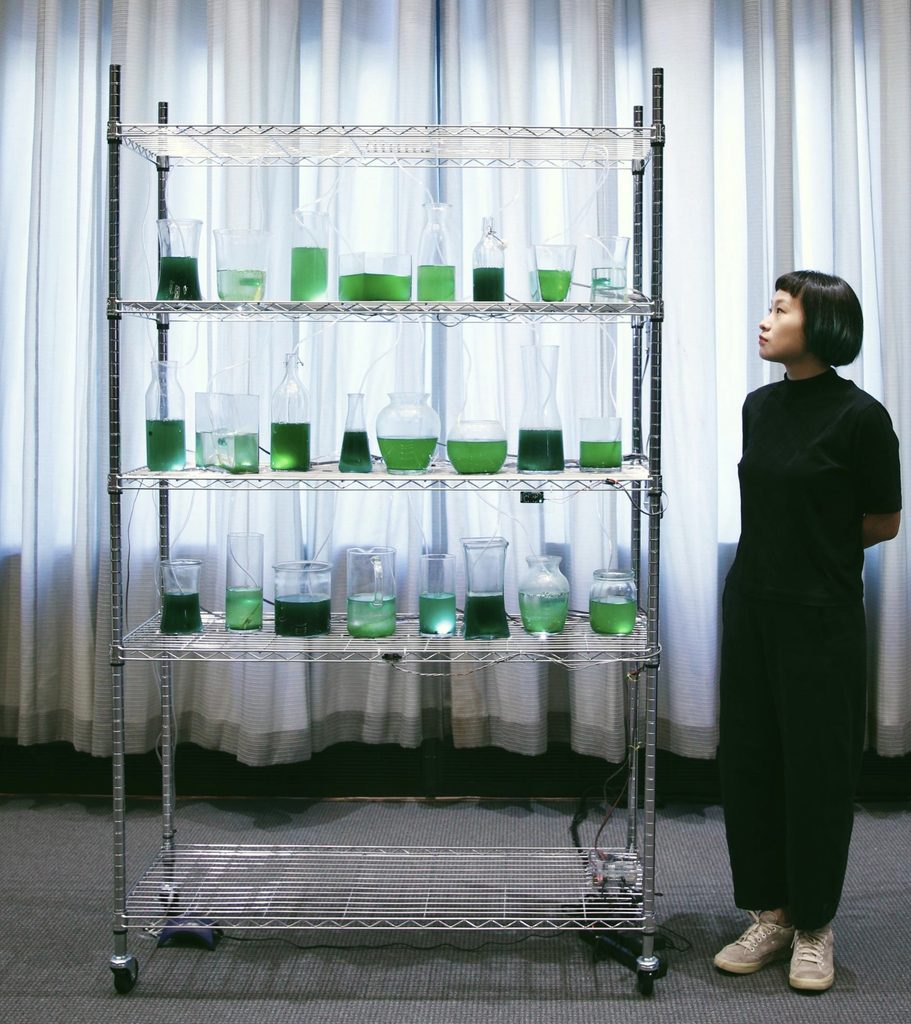
Algae Chorus is a sound installation that collaborates with living algae, in real time, transforming their movement and photosynthesis process into sounds. The algae utilize the audience’s collective carbon exhalations within the exhibition space, revealing the mutual dependencies between humans and photosynthetic organisms.
Algae are a diverse group of aquatic photosynthetic organisms that produce around 70% of the earth’s oxygen. They also assimilate most of the carbon dioxide on the earth. As we face the climate emergency, algae are critical organisms that we imagine ways to make their role in the carbon cycle more visible.
In this project, three species of algae live in disparate domestic containers in various growth stages, including single-cell cyanobacteria: Spirulina, saltwater microalgae: Nannochloropsis, and freshwater microalgae: Chlorella Vulgaris. This installation explores the visual perception of the varied green shades of each algae colony, formed by degrees of density, and it embodies humanity’s affection for green aesthetics and the essence of color originating in nature.
The algae’s growth and movements are manifested by light sensors in their biological time. While audiences inhale oxygen and exhale carbon dioxide, the atmosphere in the exhibition is slowly affected and also gets detected by a carbon dioxide sensor. All these data are translated into sound synthesis and tune the chorus.
Through a rich visual and listening experience with algae, this project provides a space for contemplating oxygen and carbon dioxide circulation, and raises questions about our habit of anthropocentrism and the hierarchy of biological taxonomy. While not providing a solution, this project aims to open a discussion on our relationship with organisms living on the earth toward a sustainable future.
Tivon Rice
Understandings: A Grimoire for Collapse (2026)
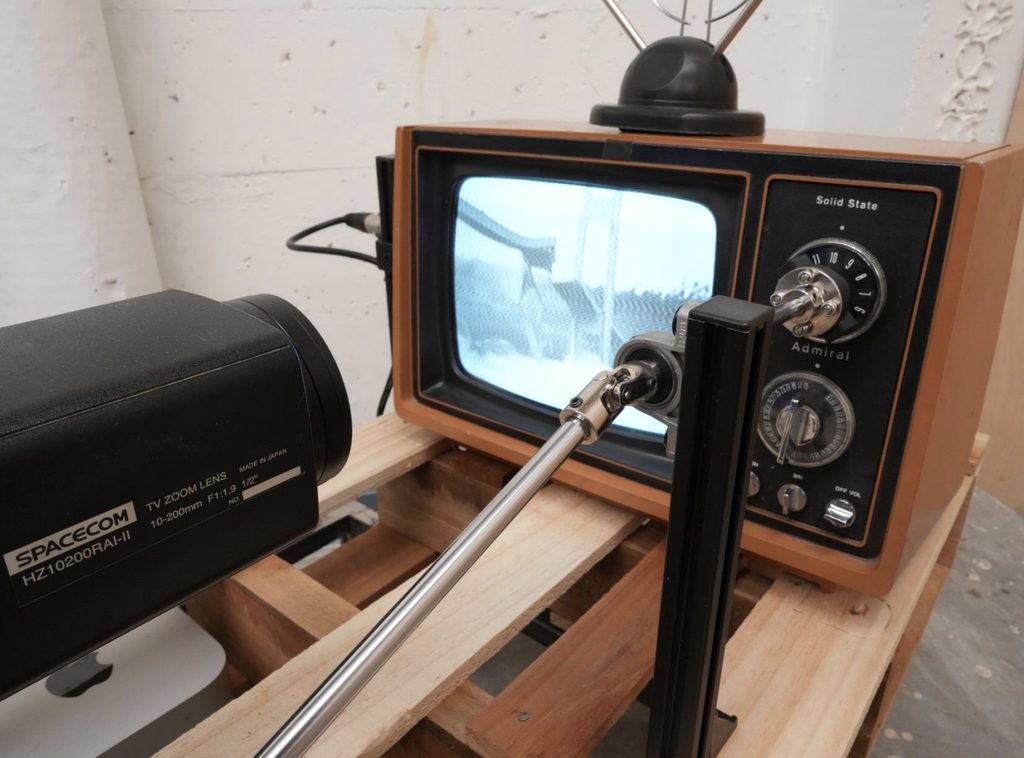
4 channel VHF television broadcast, motor, live video, sound, sculpture
This long-term research project draws inspiration from the science fiction of A. Tchaikovsky, to explore multivocality beyond human speech. The vibrations of arachnid palps or the shifting hues of cephalopod skin ask us to consider non-human intelligence and our (mis)understandings of the Other.
Unfortunately, such considerations seem forever bound to anthropocentrism if we try to simulate “their language” through “our language.” Acknowledging this, the multimedia installations within the larger “Understandings” project add additional layers of machine (mis)understanding to intentionally complicate this mediatic gap.
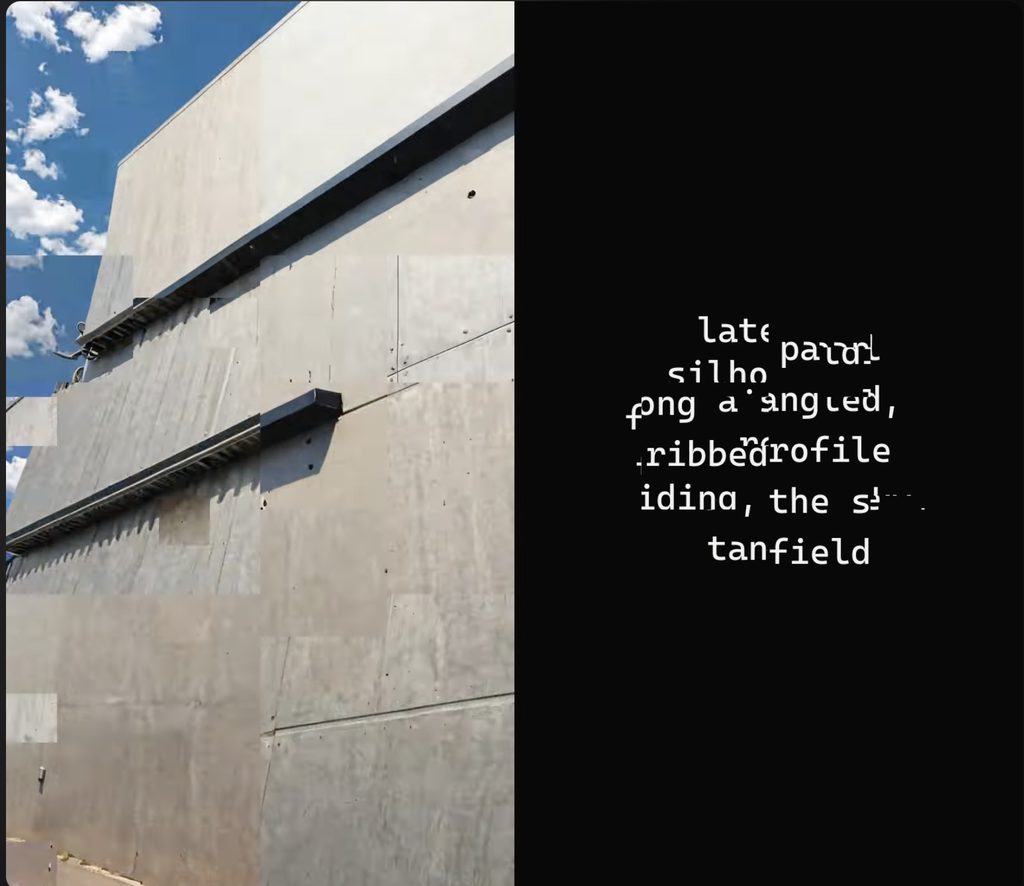
In Understandings: A Grimoire for Collapse, an AI augmented system including a robotically controlled antique television attempts to understand images of collapse: architectural, environmental, financial. Through computer vision and multiple NLP systems, this curious agent looks to the past while foretelling future collapses of technology and artificial intelligence.
GABO
Ancestral Future (2022-2026)
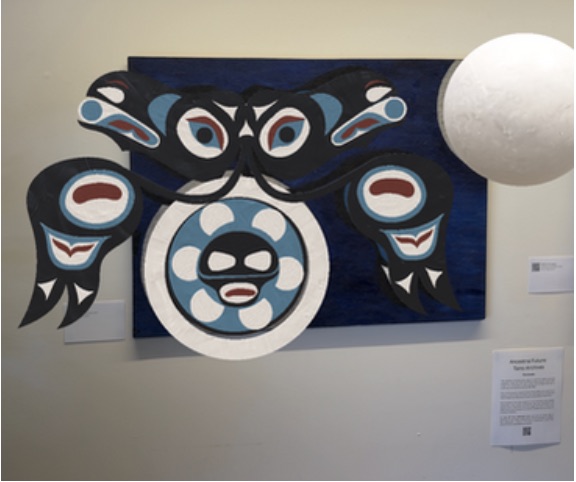
Digital print, augmented reality
Ancestral Future: Indigitized Landscapes was a project in collaboration with Yes Segura for the Future Arts Way Exhibition in 2023 where this art was printed in vinyl on a building roughly 30′ x 10′. In 2026 Pacheco recreated this augmented reality experience making this scaleable for reprint.
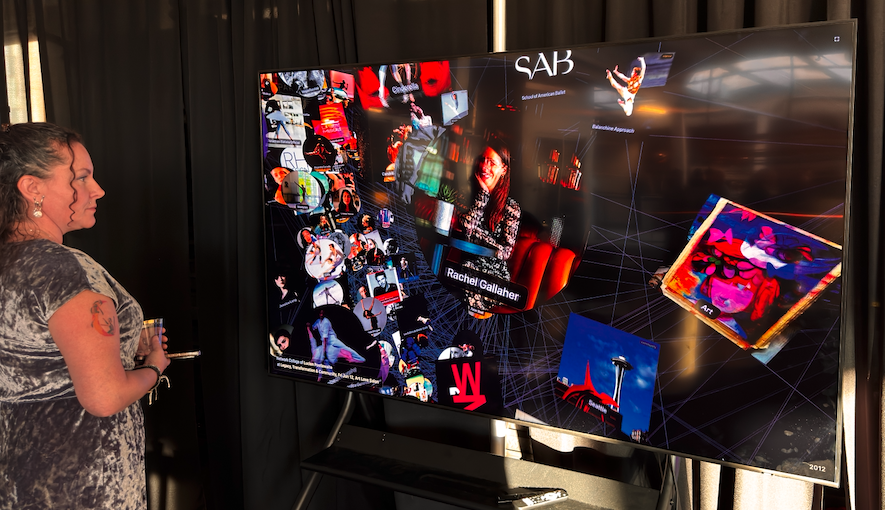
Shelly Farnham and Aubrey Birdwell
Network Collage (2026)
Digital data visualization
This interactive display shows the Art & Tech community in the PNW over time, and allows event attendees to add themselves to the animated collage.
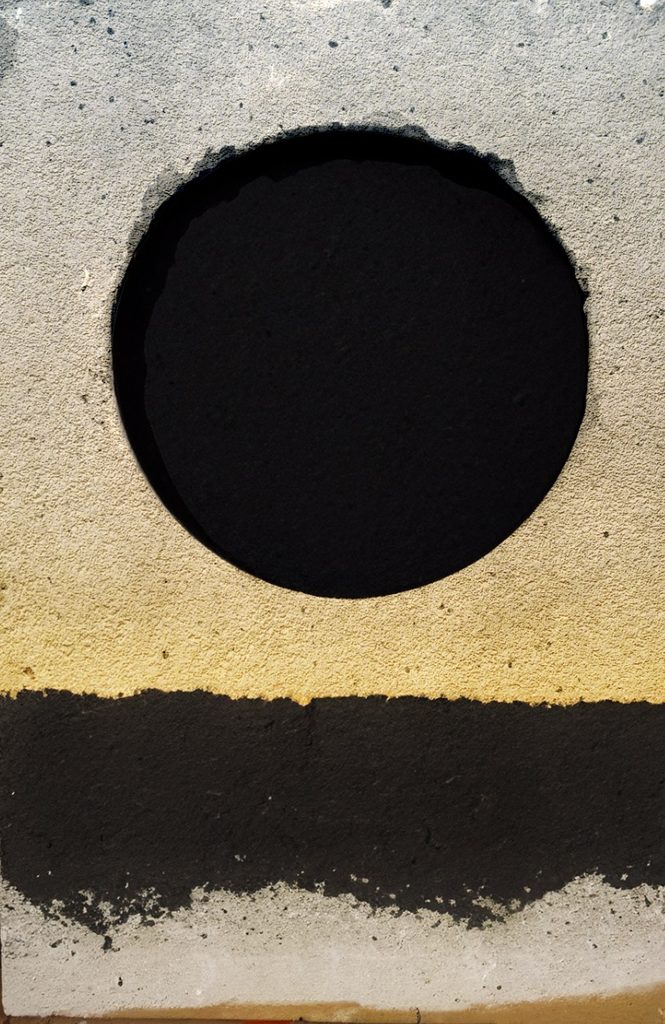
Raiffe Coléo / F Sharp
Black Moon Sunrise (2026)
Reclaimed paper pulp, post-consumer cotton thread, custom LED light engine, and microelectronics
Black Moon Sunrise is a wall-bound, eco-brutalist relief sculpture formed from salvaged paper pulp and reclaimed cotton thread. Embedded with a hidden, slow-cycling LED engine, the monolithic, heavily textured surface undergoes subtle, imperceptible color shifts over time, altering the depth and shadow of its eroded topography. The work explores themes of ecological permanence, industrial waste, and temporal transformation through a quiet, atmospheric light cycle.
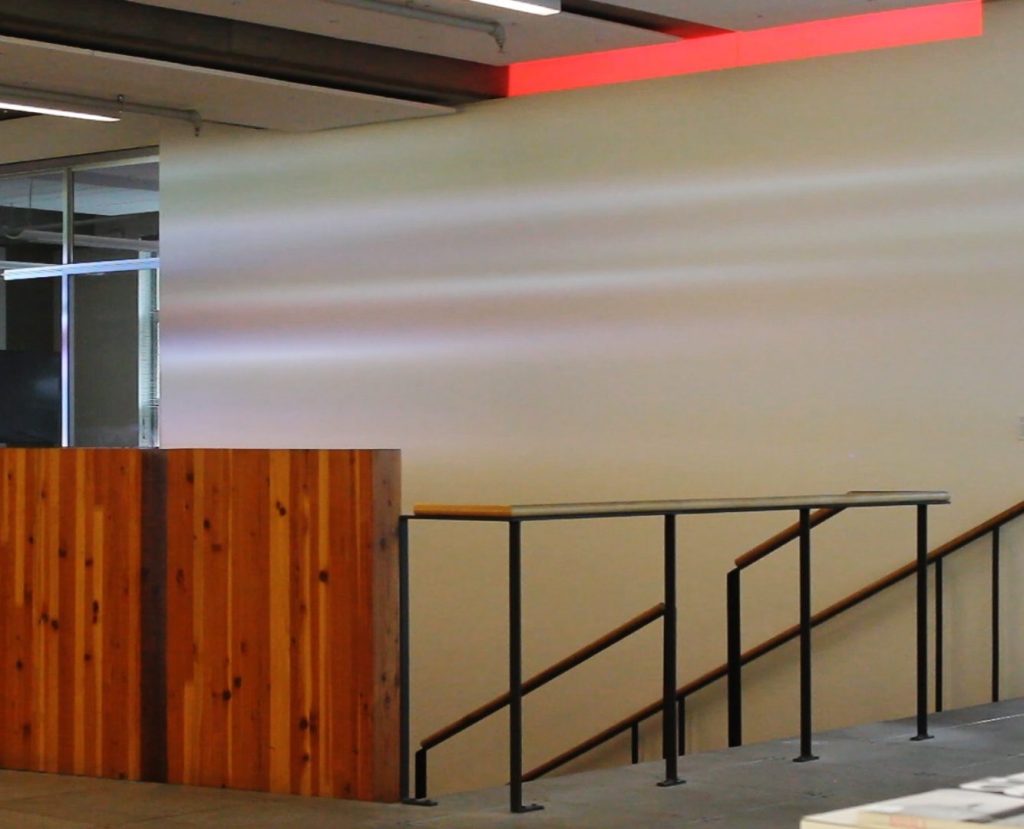
Joseph Gray
Subtle Chroma [PNW ATS 2026] (2026)
Custom software and generative projection
Generative, subtle, abstract color fields move slowly across incidental architecture surfaces. The work is both hidden and obvious, with soft dissolving forms that contrast the information overload common in contemporary environments. While it is essentially structured visible light, it becomes nearly invisible juxtaposed against the massive data input our senses have become accustomed to in the always on digital era.