
Program 2026
Explore symposium talks, 9e26 conversations, workshops, exhibitions, and community events for the PNW Arts & Technology Symposium, October 22–November 1, 2026. Registration is required, and space is limited, sign up for workshops when registering for the event.
Workshops
Make a Small Plush Toy
Hosted by Simran Jagnik
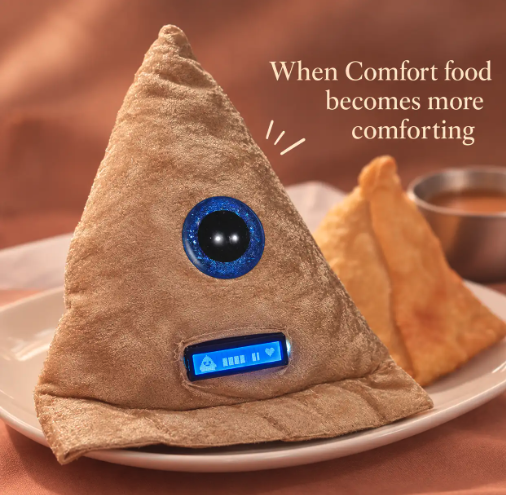
Plushie Pets: A Tiny Interactive World.
What happens when a digital companion leaves the screen and becomes something you can hold? In this hands-on workshop, participants will create a small plushie pet using Arduino, a small screen display, buttons, and stitched fabric elements. Drawing from the playful mechanics of Tamagotchi and digital pets, we’ll experiment with giving these tiny creatures moods, needs, behaviors, and personalities.
Combining craft, code, and game design, the workshop invites participants to explore how simple interactions can create a sense of character, attachment, and play. No prior coding or electronics experience is required; just come with a willingness to make, experiment, and bring a tiny creature to life.
Simran Jagnik is a creative technologist, artist, and educator, originally from NYC. She is an Associate Professor of Game Art and Design at Cornish College of the Arts, Seattle University. Her artistic practice explores interaction, perception, and participation through a mix of digital and physical media. She holds an MFA from Parsons School of Design, NY. See http://www.simranjagnik.com/.
Digital Signal Processing for Artists
Hosted by Adrian MacDonald
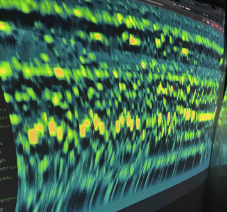
Participants will use an interactive web interface built with React and p5.js to explore digital signal processing through their laptop microphones. Guided exercises will move from live waveforms to frequency spectra, experimenting with sampling, FFTs, spectral analysis, and the transformation of signals into sound and visual form. We will then extend these techniques beyond audio to consider how environmental signals such as temperature, weather, and other sensor data can become material for composition and creative coding. No prior DSP experience is required.
Adrian is a UX engineer and creative technologist. See https://github.com/adrmac
Halloween Cyberdeck Hack Session
Hosted by Doug Carmean
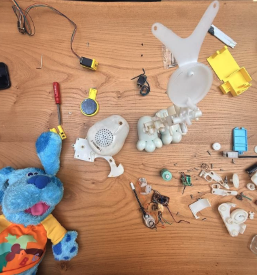
This is a workshop to build cyberdecks, particularly inspired by the proximity to Halloween. A cyberdeck is a computer, or device, that someone crafted by hand, usually with repurposed parts, rather than buying it off the shelf.
Doug Carmean is the Co-founder of xispa – an Art Innovation Lab. Doug has 40-years of experience in high-tech including Intel Fellow, Distinguished Engineer at Microsoft, Director of Research Science at Meta Reality Labs Research. Doug co-created Meta’s ART and Expansive Thinking artist-residency program, and is a painter and collector. See https://xispa.art/
Alternative Game Controllers
Hosted by Hank Duhaime
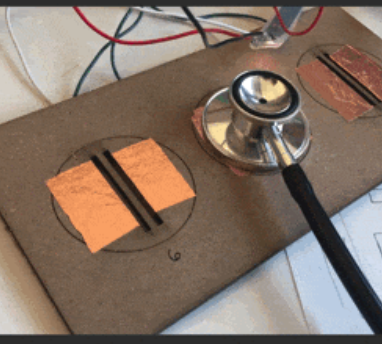
Joysticks and buttons are boring! Come learn about how we can use sensors to build our own game controllers for embodied play. We’ll use a microcontroller to sense physical interactions and connect to a customizable endless sidescroller game.
Hank is a creative technologist based in Seattle passionate about LEDs, electronics education, and fun and games. See https://hankduhaime.com/
Visualizing Stories through Light: Creative Coding with LEDs
Hosted by Siddharth Chattoraj
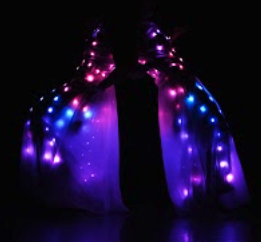
What can we create when code becomes light? This hands-on workshop introduces creative coding and pixel mapping through color, rhythm, and animation. Participants will use Pixelblaze’s browser-based interface to live-code animated LED patterns while learning the fundamentals of variables, functions, timing, and interactive visual design. The workshop culminates in a collective light showcase, where each participant builds and activates an original pattern and sees their code come alive in real time.
Siddharth Chattoraj is a visual storyteller who builds immersive worlds and accessible creativity support tools for interactive storytelling. See https://siddharthchattoraj.com/.
Casting the Living Body
Hosted by Cass Abernathy
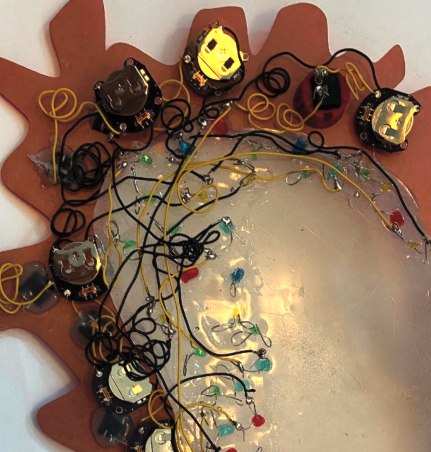
The human body is the basis of interaction, so what better medium for tech artists than to integrate sculpture cast from a live form? This workshop will teach participants the basics of “lifecasting”, creating casts from a living being. I will provide a short overview of the process and then demonstrate by molding and casting a human foot. Lastly, I will discuss how to integrate electronics and other responsive technical media into castings to create an interactive sculpture.
Cass (she/her) is a Brazilian-American artist, practicing art for twenty years. She primarily works with three-dimensional art, including clay sculpture, bronze casting, mixed media sculpture, resin and silicone casting, and lifecasting. In 2027, she will graduate from New York University Tisch School of the Arts with a Master of Art in Interactive Media Art. See https://www.instagram.com/lifecassing.
Make a Mint Tin MP3 Player
Hosted by Cam Smith
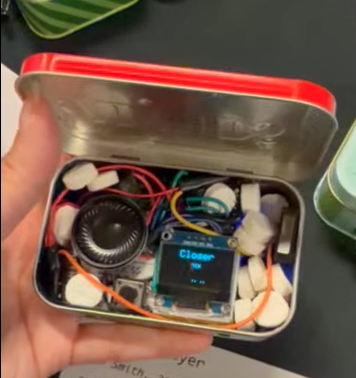
This workshop provides basic instructions for using an esp32 microcontroller to create a mp3 player. This lesson involves basic hardware and coding.
Cam Smith is an artist based in Seattle, WA. His work explores how technology can be used for surveillance, exploitation, and control. See https://smith.cam/cam.html.
Arts & Technology Symposium
Opening Agenda
Shelly Farnham and Genevieve Tremblay
Building on the 2025 Art & Tech Symposium’s focus on fostering a thriving arts and technology community, this year’s gathering turns toward creative practice as a form of inquiry, bringing together artists, technologists, researchers, educators, and organizations working across disciplines and forms of knowledge. On behalf of Third Place Technologies, Shelly Farnham and Genevieve Tremblay will welcome participants and frame the day within the larger effort to strengthen an interdisciplinary arts and technology ecosystem in the Pacific Northwest, connecting people, practices, and spaces for experimentation, exchange, and collaboration.
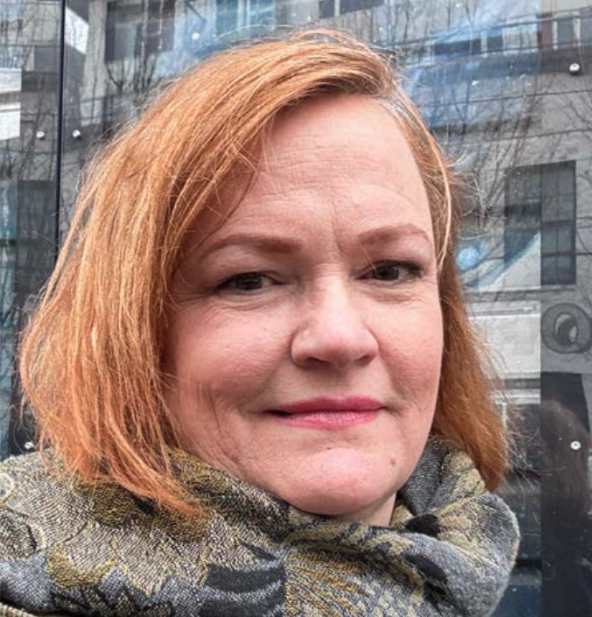
Shelly Farnham
Event Chair
Shelly Farnham is an artist, technologist, and President of Third Place Technologies. Her career as an artist and technologist is strongly interwoven with her passion for community organizing. She has a Ph.D. in Social Psychology and B.A. in Fine Art, and for the majority of her career worked as an innovation researcher on R&D teams, including Microsoft Research, Yahoo!, Google, Facebook and several community technology startups. She now pursues her passion for experimental, new media art and community organizing.
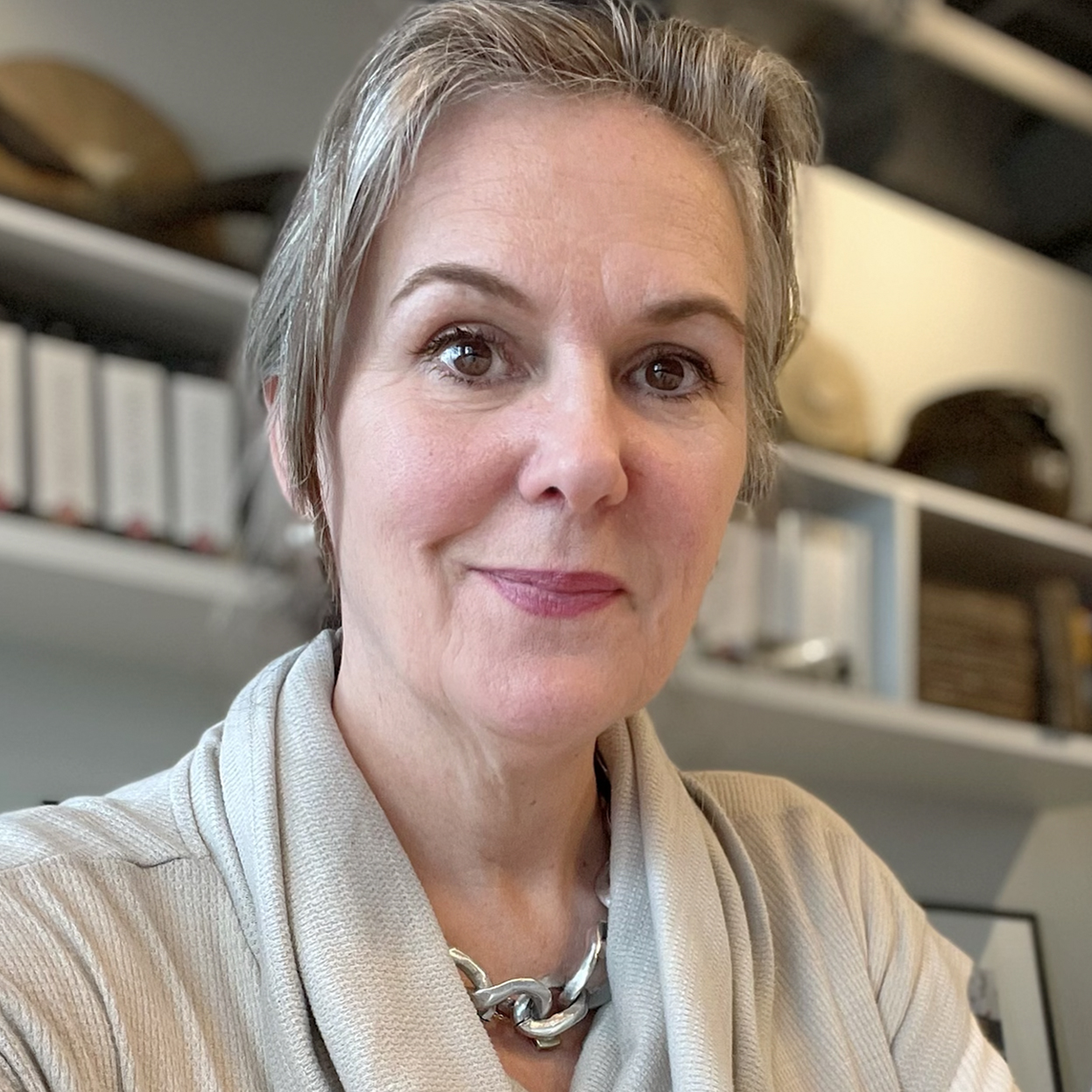
Genevieve Tremblay
Session Chair
Genevieve Tremblay is a Bellevue-based new media artist, interdisciplinary researcher, and convener focused on fostering resilient, cross-disciplinary creative communities. She is an artist member of SOIL Gallery, adjunct researcher at SECOS Millennium Institute (Chile) and Climate Knowledge Collective, and a founding board member of Third Place Technology and Indigo Arts Alliance (Maine). A co-author of Fostering Communities of Innovation at the Intersection of Art and Technology in the PNW, Tremblay brings expertise in mapping and sustaining creative knowledge networks as an organizer of the symposium.
Art as Inquiry and the New Materiality
Anne Balsamo

Anne Balsamo’s opening keynote explores the intersections of art, design, technology, and cultural memory, building on a career devoted to interdisciplinary creative research and education. Drawing from her work in areas ranging from digital media and cultural heritage to FemTechNet and the development of UT Dallas’s School of Arts, Technology, and Emerging Communication, she considers how technological change reshapes the ways we create, preserve, and understand culture. Her talk will help set the stage for this year’s gathering, inviting us to consider creative practice as a form of inquiry, how our materials and methods are changing, and what kinds of environments can support meaningful experimentation across art, science, design, and technology.
Anne Balsamo is a scholar, designer, educator, and creative researcher whose work examines how technologies shape culture, bodies, knowledge, and the ways we imagine and create the future. She is Professor and Arts and Humanities Distinguished Chair at the University of Texas at Dallas, where she served as the inaugural dean of the School of Arts, Technology, and Emerging Communication (ATEC).
Her books include Technologies of the Gendered Body: Reading Cyborg Women and Designing Culture: The Technological Imagination at Work, alongside creative research projects such as the digital transformation of the AIDS Memorial Quilt. Across her scholarship, design practice, and interdisciplinary projects, she has explored questions of cultural memory, materiality, technological change, and the production of knowledge.
Technical Talks: MAKING THE INVISIBLE PERCEPTIBLE
Three presentations · 25 min + 5 min Q&A each
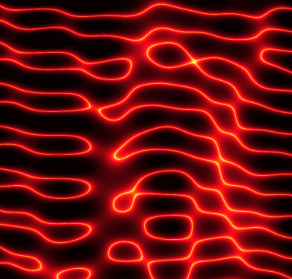
Light Beyond Reach
Joel Lamberg
There is light around you that no eye or lens can reach. This talk is about what it looks like, why it matters, and how to see it anyway: solved exactly from physics, through a process that runs backwards – I choose the cause, and physics chooses the outcome.
Joel Lamberg is a Finnish optical scientist and light artist. He visualizes light never seen before, solved exactly from physics. He spent a decade in construction before earning a PhD on light, which led him to NASA JPL and Seattle tech. See artofthescience.com.
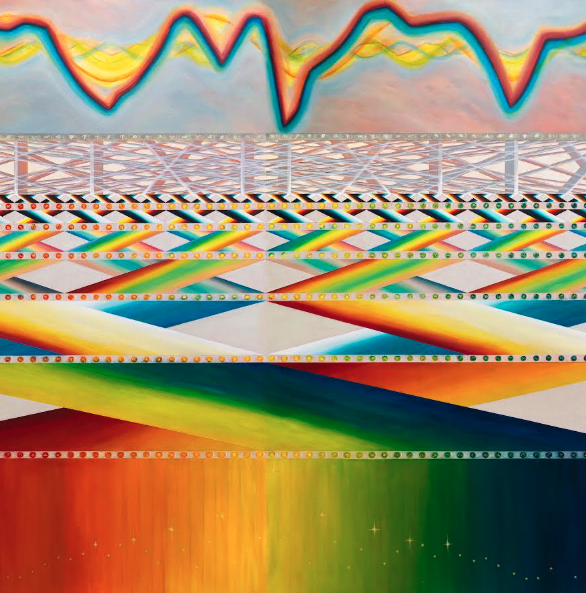
Visualizing the FFT in Paint and Code
Juliet Fiss
How can a painting reveal the inner workings of an algorithm? Artist Juliet Fiss shares the creative process behind Flight Pattern, a mathematical painting that makes the fast Fourier transform visible through hand-painted patterns. She discusses the software that brings the painting to life with interactive overlays and projection mapping, allowing viewers to explore how changing a signal transforms its frequency spectrum.
Juliet Fiss is a computer scientist and mathematical artist from Kirkland, WA. She has a B.S. in Imaging Science from Rochester Institute of Technology and a Ph.D. in Computer Science & Engineering from the University of Washington. Her paintings are visualizations of mathematics and computer science algorithms. See https://positivesum.art/about/cv
Algae Chorus: Listening to the Green
Yan Shao
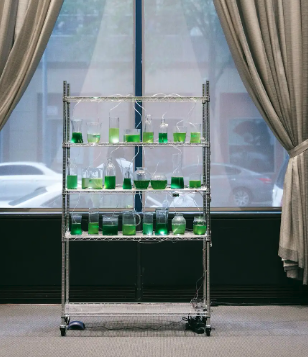
In Algae Chorus, three species of living algae respond in real time to visitors’ movement and breath, tuning light and photosynthesis into sound. This talk will trace the project from an encounter with cyanobacteria, through the ecological ideas that shaped it, to the technical development of Algae Chorus and its companion work, Autopoiesis. The work provides space to contemplate the circulation of oxygen and carbon dioxide, and invites us to experience an intimate relationship with photosynthesizers.
Yan Shao is a terrestrial artist and creative technologist based in Seattle. She works with creative computing and custom-built systems to explore intricate interrelations between humans and the Earth. Her installations translate ecological perception and geologic time into interactive experiences, offering poetic encounters with organisms and inorganic partners. See www.shaoyan.art
Artists’ Rapid Talks
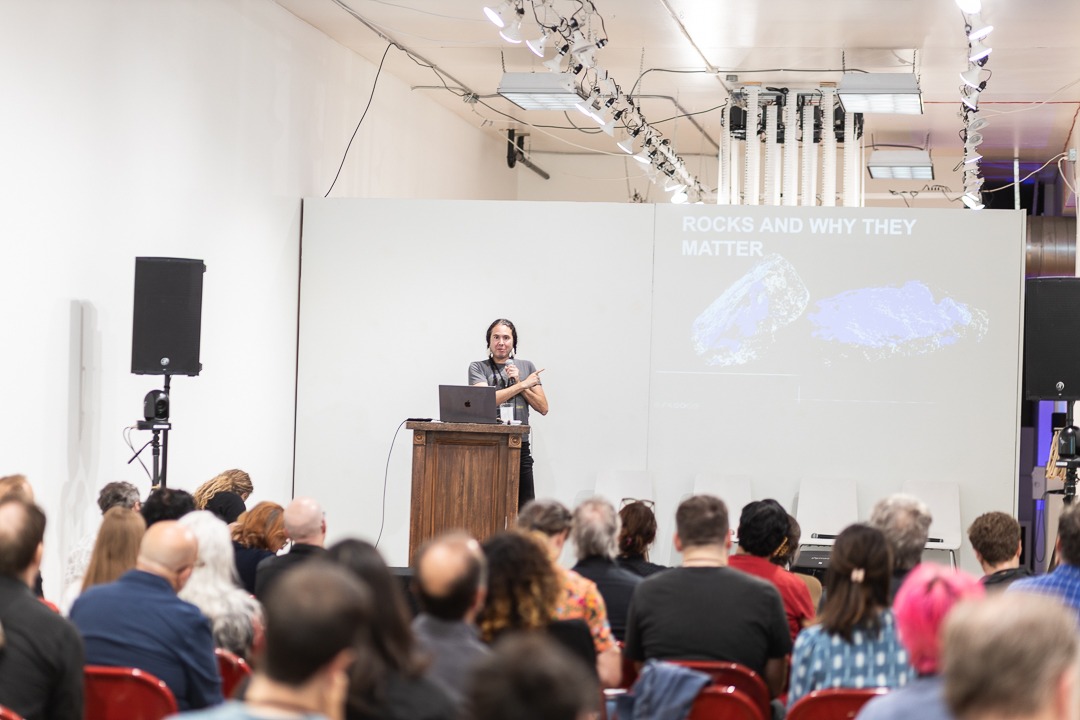
Learn more about the art in the exhibitions from the artists over 12 short talks. The list of participating artists is coming soon.
Technical Talks: CREATIVE PRACTICE ACROSS SYSTEMS
Three presentations · 25 min + 5 min Q&A each
From Vacuum Tube to WebGL: Rebuilding the Rutt/Etra Scan Processor
Reilly Donovan
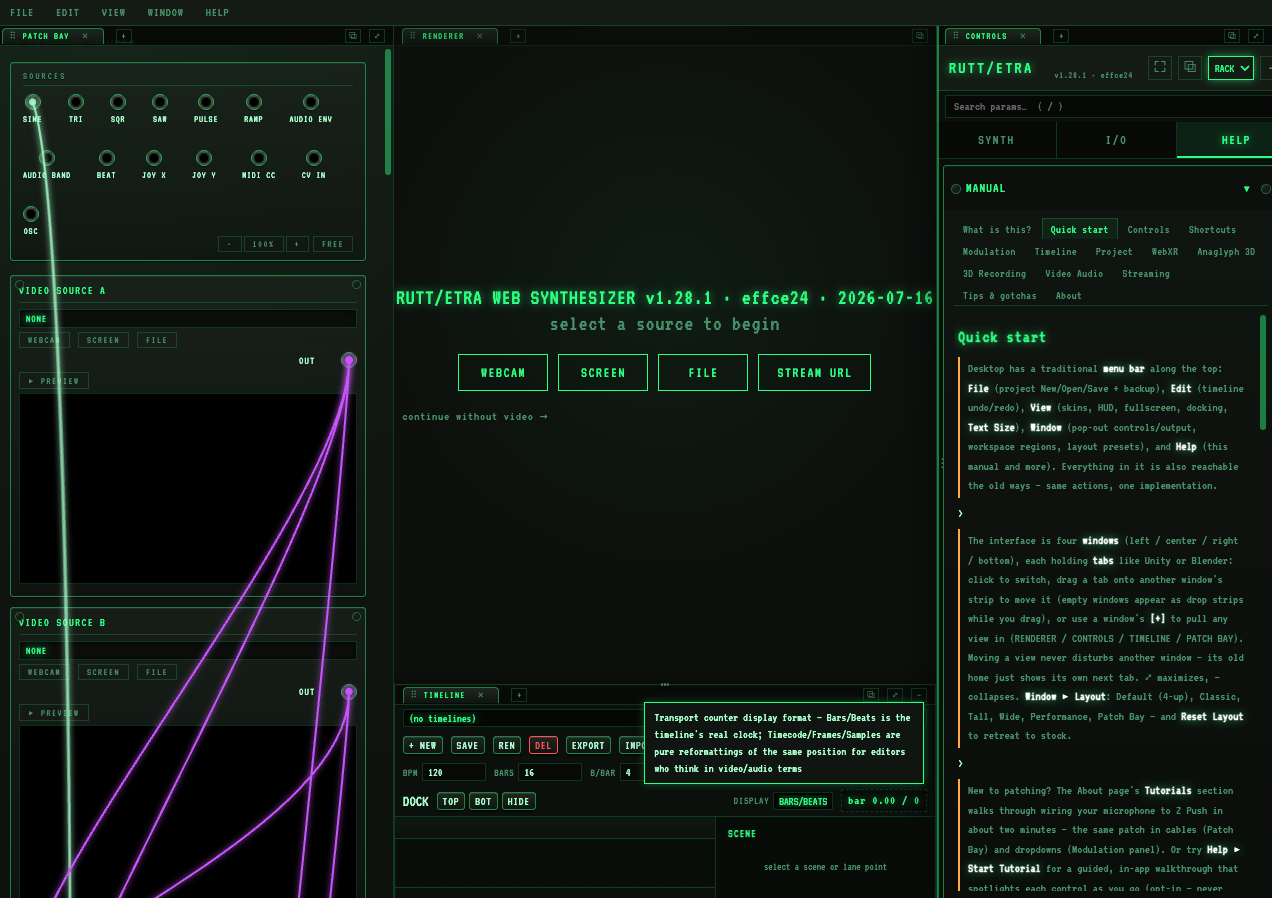
In 1973 Steve Rutt and Bill Etra built a device that would come to define a whole style of video art: an analog machine that reshaped a video image by electromagnetically deflecting the electron beam inside a CRT, turning a flat raster into something with sculptural depth. Nam June Paik, Gary Hill, Steina Vasulka, and Woody Vasulka all worked with it, alongside Bill and Louise Etra’s own pieces and the performance scene the Etras and Vasulkas started at The Kitchen in 1971; it even generated the fictional network’s logo in the 1976 film Network. Only 17–21 units were ever made — they were expensive, labor-intensive to build, and technically flawed, with CRTs that burned easily and had to be replaced, so an instrument central to a generation of video art now survives mostly as documentation of itself.
RuttEtraWeb is a browser-based reconstruction — real-time scan processing in WebGL with modulation, MIDI/OSC control, WebXR, and stereoscopic export — and this talk uses it to ask what actually survives a rebuild, and what has to be decided deliberately once the physics stops deciding for you; I’ll demonstrate it live and close with it running in your browser, no install required.
Reilly is a Seattle artist and creative technologist working in browser-based video instruments, generative AI, XR installation, and film See https://reillydonovan.com and https://ruttetraweb.com.
The Artist as Systems Integrator
Aubrey Birdwell
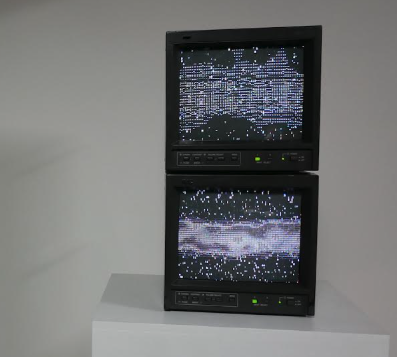
Technological art does not require inventing new technology or mastering every technical discipline involved. This talk explores the artist as systems integrator: combining existing hardware, software, fabrication processes, interfaces, and communication protocols to create new behaviors and experiences. Through selected artworks and practical examples, I will discuss strategies for making technically ambitious work more accessible and manageable.
Aubrey Birdwell is a Seattle-based artist and researcher working across media and technology. His work often begins with familiar forms such as signs, screens, text, video, and data, which he reworks through physical and computational processes, sometimes deriving meaning from the materials, technologies, and the processes themselves. Recurring concerns include architectures of language, physical and digital forms of memory, disappearance, and digital decay. His work has been exhibited nationally and internationally, including at CICA Museum, Manifest Gallery, and Pacific Science Center. Birdwell is a 2026–27 New Media Gallery artist at Jack Straw Cultural Center and an artist-in-residence at Passable. He holds an M.S. in Computer Science from Georgia Institute of Technology. See https://www.aubreybirdwell.com/
Where is the AI in Your Work? Mapping Agency in Creative Practice
Sam C. Shin
“Is it AI art?” has become the default question, and it is the least useful one available. This talk replaces that binary with a spectrum of agency: auto-tagging and upscaling, assisted implementation, co-creation, and fully generative systems. I start by placing my own practice on it, including where I chose not to hand work over. Then I turn the same question on the room. Along the way we look at what the research actually shows: whose work these systems were trained on, and what happens to a field’s diversity when everyone reaches for the same tools. You should leave with sharper vocabulary for your own use of these tools, and for the questions of consent, transparency, and compensation that follow.
Sam C Shin is an electronic music composer with a Ph.D. in digital composition. He writes, speaks, and publishes research on human-AI co-creation and artistic agency. See https://www.samcshin.com/
Reflections
Ana Pinto da Silva
As our closing keynote and a member of the PNW Arts & Technology Symposium founding team, Ana Pinto da Silva brings a perspective shaped by years of building connections across disciplines, institutions, industries, and communities. Drawing together ideas emerging throughout the gathering, she will help us look ahead to how we strengthen the Pacific Northwest’s creative ecosystem, build new forms of collaboration, and imagine what comes next.
Ana Pinto da Silva is a designer, technologist, educator, entrepreneur, and civic leader whose work spans architecture, emerging technology, interdisciplinary education, and social innovation. She recently served as Head of the School of Design at Carnegie Mellon University, where she continues as faculty, and previously led the interdisciplinary Master of Human-Computer Interaction + Design program at the University of Washington. Her career in technology and design has included leadership and innovation roles at Amazon, Microsoft, and NBBJ, bringing together design, technology, and the built environment in response to human and community needs.
Throughout her career, Ana has explored how design and technology can strengthen communities, expand access, and contribute to more equitable and resilient futures. She is the founder and CEO of 2G3R (“together”), which brings architecture, technology, accessibility, and community together to explore new ways of thinking about how and where we live as we age. Her civic work includes founding Seattle Pecha Kucha, creating a long-running public platform for conversations around design, technology, equity, culture, and civic life.
See https://www.linkedin.com/in/apintodasilvaThe 9e26 Sessions
In 1966, artist Robert Rauschenberg got together with Bell Laboratories engineer Billy Klüver to produce “9 Evenings: Theatre & Engineering.” Working with a group of artists, performers, choreographers, engineers, and technicians, they produced nine nights of performance driven by the high tech of the time. Some of the technologies they employed were very new, while others had never been used as elements of performance: infrared video, Doppler sonar, biofeedback, projected television, FM transmitters. The event was remarkable and became a landmark in the history of the interaction between art and technology. It also spawned a series of projects that became known as E.A.T: Experiments in Art & Technology.
2016 saw a number of 9 Evenings 50th anniversary events around the world, including events in London, Istanbul, New York, San Francisco, and elsewhere. In Seattle, a group of artists, scientists, technologists, and producers came together to produce “9e2: Art, Science, and Technology” upstairs in King Street Station, before the space became the home of Seattle’s Office of Arts & Culture.
9e2 featured nine days and nights of exhibits, installations, performances, lectures, and discussions. The event included explorations of data-driven art, virtual reality, augmented reality, accessibility, surveillance, neuroscience, machine learning, the use of depth sensors in art, and more. Artists included Tamiko and Midori Thiel, pioneering eco-artist Newton Harrison, Ginny Ruffner, Gary Hill, DJ Spooky, Thomas Deuel, Reilly Donovan, a group of artists brought together by Ellen Ziegler, and many others. Schools participated, including Cornish College for the Arts, Pilchuck Glass School, the University of Washington’s DXARTS program, and the Technical Access Foundation Academy.
In short, it was amazing.
Now, 10 years after 9e2 and 60 years after 9 Evenings, we’ve created 9e26. We’ve brought together a group of artists, scientists, engineers, and writers as an element of the PNW Arts & Tech Symposium. They’ll engage in roundtable discussions looking at the interplay between art, science, technology, and society: where we are, where we’ve been over the years, and where we’re going. We hope you’ll join us.
To learn more:
- Rachael Green’s short video gives a sense of what 9e2 was like.
- The 9e2 website has been down for some time, but the Wayback Machine has faithfully rescued the dead site. Some images are gone, but most of the site is still available.
- Genevieve Tremblay put together a good overview of 9e2.
- To learn more about 9 Evenings, this page is a good introduction, with links to great resources.
The Six Conversations
Art and Technological Shift
Conversation guests: Aubrey Birdwell · Robin Oppenheimer · Cam Smith · Diana Xie
How tools and technologies appear, grow, morph, adapt, are adapted to, die (or are killed), and are sometimes reborn. What are the implications of these changes for art making? How do artists work with them, deal with them, turn them to their advantage? Can these changes, and the arrival of new technologies, function to make whole new art forms?
The Persistence of Analog in a Digital Age
Conversation guests: KC Cole · Reed O’Beirne · Timea Tihanyi · Samantha Yun Wall · Rob Zverina
How analog (formats, technologies, tools, ways of being) persists in a world immersed in the digital. How analog culture can be subsumed beneath the ever-present digital, and yet resurfaces, reborn anew. How can analog and digital come together to make powerful art?
Supporting and Building a Culture of Art, Science, and Technology
Conversation guests: Lele Barnett · Doug Carmean · Genevieve Tremblay · Simran Jagnik
How we create mechanisms for supporting and encouraging the interplay between art and technology, art and science. What are some of those mechanisms? For example, a traditional artist’s residency might involve a space to paint or write, or a pottery or sculpture studio. For art and tech and science, artists might find themselves in a machine shop, a computer lab, a truck garage, a farm, a scientific research facility. How can that be made to happen? And what are some of the implications of building such support mechanisms for the interplay between art, technology, and science?
The State of AR, VR, MR, XR as Tools and Avenues for Art
Conversation guests: Yuliya Bruk · Reilly Donovan · Brent Watanabe
What has become of these ways of seeing, ways of experiencing? How have they grown since their inception? And where are they going? What are some novel ways of incorporating them into art? What problems do they face, and how can these be solved?
Art and AI
Conversation guests: Janet Galore · Charles Mudede · David Nixon · Diana Xie
How AI can be an effective artist’s tool. Or not. What happens when AI is prompted to make a work of art? Is the AI software creating a work? Or is it a collaboration by the people whose work has trained the LLM? Can AI be integrated into art such that its role becomes invisible?
Art, Technology, Science, and Society
Conversation guests: Ana Pinto da Silva · Janeil Engelstad · Theresa Earenfight · Thomas Deuel
Can the interconnection of art and science, of art and technology, provide new—and maybe better—ways of building the next iteration of human culture, society 1.x? How do we make a close observation of the world, and take effective and humane action based on that observation, when flooding the zone with muck has become default. How do we heal? Can the interconnection of art, science, and technology enter into that healing, and help us build something new, something wonderful?
Conversation Guests
Lele Barnett
Lele Barnett is a Curator and Program Director who has spent over 25 years helping artists, collectors, and organizations find each other and do meaningful work together — including more than a decade embedded in some of the world’s leading tech companies. At Meta Reality Labs Research, she co-created the ART and Expansive Thinking program with Doug Carmean. Over her career, she has served as a curator for Meta Open Arts, the Microsoft Art Collection, the Starbucks Art Collection, and the Washington State Arts Commission. She was also co-founder of McLeod Residence, a home for extraordinary living through art, technology, and collaboration. At xispa, she leads programming, partnerships, and the artist residency model she helped pioneer.
Aubrey Birdwell
Aubrey Birdwell is a Seattle-based artist and researcher working across media and technology. His work often begins with familiar forms such as signs, screens, text, video, and data, which he reworks through physical and computational processes, sometimes deriving meaning from the materials, technologies, and the processes themselves. Recurring concerns include architectures of language, physical and digital forms of memory, disappearance, and digital decay. His work has been exhibited nationally and internationally, including at CICA Museum, Manifest Gallery, and Pacific Science Center. Birdwell is a 2026–27 New Media Gallery artist at Jack Straw Cultural Center and an artist-in-residence at Passable. He holds an M.S. in Computer Science from Georgia Institute of Technology.
Yuliya Bruk
Yuliya Bruk (she/they) is a Soviet born creative director, new media artist, and community facilitator who has crafted interhuman experiences through cameras, curation, and public programming since before the internet. In 2021, Yuliya founded a Seattle based, global community emerging tech/arts nonprofit, Future Arts, building dignity for artists working with technology. Women and non-binary lead, Future Arts bridges accessible opportunities across ages, cultures, and industries, keeping natural systems as a grounding ancestral force. Yuliya enjoys aquascaping, dancing, and dialing rotary phones through her VR headset.
Doug Carmean
Doug Carmean is an avid art collector, painter, and technologist whose work sits at the intersection of art and emerging technology. At Meta Reality Labs Research, he co-created the ART and Expansive Thinking program, collaborating directly with artists to explore how new technologies could expand creative practice. Over a 40-year career in the technology sector — as a Director of Research Science at Meta, Distinguished Engineer at Microsoft, and Intel Fellow — Doug developed deep expertise in computing systems and optics, knowledge he now brings to bear in service of artistic experimentation. At xispa, he works alongside artists as Lead Artist-Technologist, translating technical possibilities into creative tools and collaborative frameworks.
KC Cole
KC Cole is the author of eight non-fiction books, including The Universe and the Teacup: The Mathematics of Truth and Beauty. She is senior senior correspondent at Wired, and has written for The New Yorker, the New York Times and many other publications. She currently teaches two courses in the UW Honors program: The Art of Understanding Science and The Science of Human Values. For 20 years, she explored connections between science, art and politics first at the Cornelia Street Café in New York and subsequently through Categorically Not! at Santa Monica Art Studios.
Thomas Deuel
Thomas Deuel is a neuroscientist, musician, neurologist, and sound artist whose work explores the intersection of neurophysiology, sound, and human expression. Drawing on training in music composition, neurology, electrophysiology of the brain, his earlier practice combined field recordings, cultural geography, and the neuroscience of listening to create immersive auditory environments. His experiences working and recording in remote regions and native cultures – from the Venezuelan Amazon and Northeastern Greenland to the Indian Himalaya and the Philippine – shaped his interest in the distinctive sonic character of place and in the ways culture, environment, and memory influence how we hear and interpret sound.
Deuel’s more recent work investigates how brain-computer interfaces (BCIs) can enable the motor impaired to be empowered to create music again after neurological injuries such as stroke, as well as to use the power of music to augment and improve their rehabilitation. He is the creator of the Encephalophone, a direct brain–music interface that uses electroencephalography (EEG) to allow a person to generate and control music without physical movement. Situated between musical instrument, neuroscience experiment, and assistive technology, the Encephalophone reflects his broader effort to dissolve boundaries between scientific inquiry, neurological assist devices and artistic practice. Through performances with paralyzed musicians, as well as experiments exploring the use of the Encephalophone as an assist device for neurological rehabilitation, Deuel seeks to create experiences that reveal the power of music to empower the motor disabled to express themselves as well as recover motor function for improved quality of life.
Reilly Donovan
Reilly Donovan (b. 1984, Seattle, WA) is a new media artist making digital artworks that span interactive installation, virtual and augmented reality, artificial intelligence, and mobile and web-based experience. His practice treats emerging technologies not as tools but as subjects — each work built inside the medium it interrogates, using the machinery of simulation, perception, and machine intelligence to examine how these systems reshape what we sense, believe, and become.
Donovan’s recent work centers on artificial intelligence as both material and question: what AI is, how humans project meaning onto it, and how our participation with these systems — direct and indirect — is quietly authoring our collective future. In The Word of the Future (Museum of Museums, Seattle, 2021), a collaboration with artist Jacob Fennell, modified neural networks generated an evolving machine-made religion — sermons, liturgical music, and shape-shifting stained glass — examining how humanity’s faith in technology mirrors the meaning-making structures of belief itself. The Seattle Times described the work as machines “not only building a new religion, but learning how to build a religion.”
Donovan has exhibited nationally and internationally since 2015, including Design Basel (Switzerland), Currents International New Media Festival (Santa Fe), Seattle Art Fair, and the Seattle Art Museum. His collaborations with sculptor John Grade produced mixed reality installations at the Mystic Seaport Museum (Connecticut) and the Anchorage Museum (Alaska), merging physical sculpture with responsive digital environments. He has held artist residencies at Pilchuck Glass School (2018) and the Museum of Glass, Tacoma (2019), where he explored the intersection of glass and mixed reality — placing one of humanity’s oldest optical technologies in conversation with its newest.
Theresa Earenfight
Theresa Earenfight is a historian who focuses on women whose lives have been overshadowed by more powerful or prominent men. Her most recent book, a biography of Catherine of Aragon, told the story of her life with King Henry VIII of England, through art and material culture. Her most recent project is a biographical study of Gerda Taro (1910–37), a Polish-German Jewish woman who was the first woman war photographer and the personal and professional partner of Robert Capa.
Janeil Engelstad
With an expansive creative practice working as an artist, scholar, writer and educator Janeil Engelstad has worked in residence and in partnership with institutions, governments, and communities for over three decades. Producing interdisciplinary art projects that address social, historical and environmental concerns throughout the world. Valuing the potential of collaboration, Engelstad’s process for this work involves embedding herself in communities, deep listening, extensive research and building interdisciplinary coalitions.
Engelstad is the Founding Director of Make Art with Purpose (MAP), an organization that produces collaborative, artist led, social practice projects. Her work has been produced and exhibited in partnership with: Amon Carter Museum of American Art, Fort Worth, TX; Art Residency Thailand/PREM, Chiang Mai, Thailand; Central European Foundation; Dallas Museum of Art; International Center of Photography, New York City; Łaźnia Centre for Contemporary Art, Gdańsk, Poland; Museum of Arts and Design, New York City; Oboro, Montréal; Stanica Žilina-Záriečie, Slovakia; The US Department of State and many others. A Fulbright Scholar, Engelstad has taught and lectured at universities around the world and is a member of the Social Practice Art Research Center at University of California Santa Cruz, and an Advisory Board Member of the Art and Technology Lab at University of Texas, Dallas.
Janet Galore
janet galore is an interdisciplinary artist and designer based in Seattle. She’s spent over 30 years creating new experiences in emerging tech, from co-designing the first virtual reality game for personal computers in the 1990s, to prototyping at Microsoft Research, to designing AI models at Google DeepMind in her current role. Outside of work, janet co-directs The Grocery Studios, a creative space hosting pop-up music, film, art, workshops, and lectures. Her award-winning art and animation centers on themes of perception, parafiction, and the surreal. janet holds a BS in pure mathematics from the University of Washington and over 25 patents.
Simran Jagnik
Simran Jagnik is a creative technologist, artist, and educator, originally from NYC. She is an Associate Professor of Game Art and Design at Cornish College of the Arts, Seattle University. Her artistic practice explores interaction, perception, and participation through a mix of digital and physical media. She holds an MFA from Parsons School of Design, NY.
Charles Mudede
Charles Mudede—who writes about film, books, music, and his life in Rhodesia, Zimbabwe, the USA, and the UK for The Stranger—was born near a steel plant in Kwe Kwe, Zimbabwe. He has no memory of this birth, but he does remember noticing himself in the mirror for this first time—it happened on May 3, 1972. Mudede is also a filmmaker: Two of his films, Police Beat and Zoo, premiered at Sundance, and Zoo was screened at Cannes. Mudede directed Thin Skin, and has written for the New York Times, Cinema Scope, Ars Electronica, C Theory, and academic journals. He also wrote the liner notes for Best of Del Tha Funkee Homosapien: Elektra Years. Mudede has lived in Seattle since 1989.
David Nixon
David Mitsuo Nixon is a philosopher, educator, musician, and performer based in Seattle. He teaches philosophy and computer science at the University of Washington Bothell, including courses such as Philosophical Explorations of Science Fiction and Ethics and Human Flourishing. He is particularly interested in questions about artificial intelligence, meaning, understanding, and what—if anything—makes human thought distinctive. Outside the university, Nixon is a longtime member of the Seattle performance ensemble “Awesome,” whose work combines music, theater, storytelling, spectacle, and assorted conceptual mischief. His interests tend to gather around the places where art, technology, philosophy, and human weirdness collide.
Reed O’Beirne
Reed is a multi-media artist and technologist who works with techniques ranging from computer vision and virtual reality to filmmaking, photography and music. A common theme in his work is the questioning of the boundaries of these diverse formats. He seeks to evoke the user’s sense of self-awareness in order to open space for their own subjective response to both the artwork and, more importantly, to the nowness of the world around them. His films and art projects have been exhibited at over sixty-five festivals and art events in twenty countries, including the Edinburgh Film Festival, Shanghai’s OCAT Contemporary Art Terminal and the DOK Leipzig. more: https://www.reedoco.io
Robin Oppenheimer
Robin Oppenheimer is a Seattle-based internationally recognized media arts historian, writer, curator, educator, and scholar who has worked in the field since 1980. She was Executive Director of media arts centers in Atlanta (IMAGE Film/Video 1984-89) and Seattle (911 Media Arts 1989-95). Earning a PhD in Interactive Arts and Technology at Simon Fraser University in 2011, she was a Lecturer at the University of Washington Bothell (2008-2015) and adjunct faculty at Cornish College of the Arts (2014-16).Other projects include participating in 9e2 as a media arts historian and working as a media arts historian/writer for Google’s Artist and Machine Intelligence group in Seattle (https://ami.withgoogle.com/). Her areas of research and expertise include media arts histories, with an emphasis on video art, 1960s collaborative art & technology projects (light shows, 9 Evenings and E.A.T.), and media activism.
Ana Pinto da Silva
Ana Pinto da Silva is a design technologist, educator, and civic leader advancing innovation at the intersection of technology, design, and societal impact. Founder and CEO of 2G3R and a professor at Carnegie Mellon University’s School of Design, Ana builds interdisciplinary communities dedicated to shaping equitable and resilient human futures. With a career spanning strategic, future-focused initiatives for Amazon, Microsoft, and NBBJ, Ana’s work explores the intersection of design, technology, policy and innovation. As the founder of Seattle’s Pecha Kucha speaker series and co-founder of Harvard GSD’s global Design Impact initiative, Ana is committed to fostering courageous conversations world-wide. Ana’s leadership includes extensive board service across cultural, civic, and educational institutions.
Cam Smith
Cam Smith is a Seattle-based artist whose work explores how Artificial Intelligence is used for surveillance, exploitation, and violence. His work has been exhibited at the Tacoma Art Museum, the Bellevue Arts Museum, The Pacific Science Center, and galleries across the PNW and nationally. He is the resident artist at Passable and a member of the artist collective Common Area Maintenance. He is the co-author of “AI MUST DIE,” which can be found at Left Bank Books, Elliott Bay Book Company, and dozens of bookshops in the USA and around the world. He actively engages with the public by teaching workshops, giving talks, and hosting office hours that are open to everyone.
Timea Tihanyi
Timea Tihanyi is a Hungarian born interdisciplinary visual artist, ceramicist, and creativity and leadership coach living and working in Seattle, Washington. She is the founder and director of Slip Rabbit, the first technoceramics studio in the Pacific Northwest. Tihanyi is an Emeritus Teaching Professor at the University of Washington and the author of Making and Breaking Rules – Algorithmic Forms and Tactile Processes.
Genevieve Tremblay
Genevieve Tremblay is a Bellevue-based new media artist, interdisciplinary researcher, and convener focused on fostering resilient, cross-disciplinary creative communities. She is an artist member of SOIL Gallery, adjunct researcher at SECOS Millennium Institute (Chile) and Climate Knowledge Collective, and a founding board member of Third Place Technology and Indigo Arts Alliance (Maine). A co-author of Fostering Communities of Innovation at the Intersection of Art and Technology in the PNW, Tremblay brings expertise in mapping and sustaining creative knowledge networks as an organizer of the symposium.
Samantha Yun Wall
Samantha Yun Wall (b. 1977, Seoul) is a Korean-American artist based in Portland, OR. Her drawings and paintings explore the psychological and emotional dimensions of transcultural identity, centering feminine perspectives of diasporic experience. Wall’s art is characterized by her unique approach that combines traditional drawing techniques with a contemporary vernacular reflecting her understanding of the world around her. Wall earned a Master of Fine Arts in Visual Studies from the Pacific Northwest College of Art and has received awards and grants from organizations including the Seattle Art Museum, the Joan Mitchell Foundation, and the Oregon Arts Commission. Her work has been exhibited widely, including at the Cue Art Foundation, New York, New York; Portland Art Museum, Portland, Oregon; the Smithsonian National Portrait Gallery, Washington, D.C.; the Seattle Art Museum and Frye Art Museum, Seattle, Washington; and the Hangaram Art Museum, Seoul Arts Center, Seoul, South Korea.
Brent Watanabe
Brent Watanabe is an artist combining a background in traditional materials and practices (drawing, sculpture) with emerging technologies (computer programming, electronics), exploring an artistic field still being defined and discovered. His work explores themes of human consumption and waste, our effect on nature and animals, as well as spirituality, suffering and sentience. Using computers, computer programming, robotics, and video game engines, he utilizes technology as a medium to explore these themes in algorithmically controlled gallery and site specific installations, online projects, and video game interventions.
The first of his video game interventions, San Andreas Deer Cam (2016), was presented live on the Internet, had over 800,000 visitors in the first three months, and was written about in dozens of publications, including New York Magazine, the BBC, and WIRED.
Brent has had a number of recent screenings, projects, and exhibitions, nationally and internationally, most recently at Cannonball Arts Center (Seattle, WA, 2025), Shanzhong Tian Art Center (closed by local censorship authorities) (Beijing, China, 2024), Digital Art Festival Taipei (Taipei, Taiwan, 2023), OGR Torino (Torino, Italy, 2023), Bureau Europa (Maastricht, Netherlands, 2022), Centro Cultural Banco de Brasil (Rio de Janeiro, Brazil, 2022), a VR artist-in-residence with Meta / Facebook (2021), MassArt Art Museum, (Boston, MA, 2020-22), NTT InterCommunication Center, (Tokyo, Japan, 2019), and MAAT Museum, (Lisbon, Portugal, 2019). He is a four-time MacDowell fellow.
Diana Xie
Diana Xie is a visual artist, immersive designer, and data scientist who turns digital systems into containers for memory and presence – translating data into poetic, embodied experiences. Past work has included turning meditation brain waves into botanic growth, collecting audience participation into MIDI-remixed liquid light shows, and co-founding Ambient Crafts, a multi-sensory show that brought together artists from disparate genres into an evening of immersion. Her current projects – including a field recording-driven light sculpture, and a mural tracing visitors’ imprints – continue this inquiry into what we leave behind.
Rob Zverina
Robert Zverina writes and makes art in the Pacific Northwest. He works across literary genres and artistic media to tell stories and make statements that range from strictly factual to absurdly fanciful. His pioneering creative nonfiction blog Picture of the Day is the longest running website of its kind. Although an early adopter and continued practitioner of the Web as a creative medium, ultimately he is a proponent of physical media who continues to publish books, produce DVDs, and exhibit objects.
Exhibition & Community
Exhibition
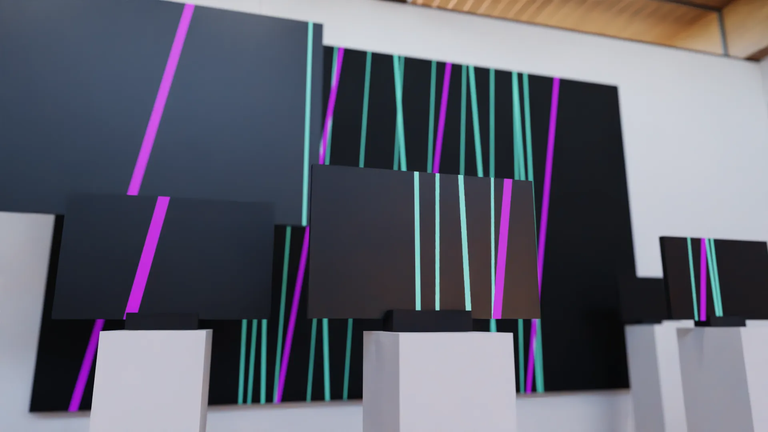
Exhibition Co-Chairs: Joseph Gray, Artist and Creative Technologist, and Jeff Brice, Professor, Cornish College for the Arts
Our arts and tech exhibition features artists and creative technologists working in new media (electronics, software art, interactive, generative, mechanical or other new and emerging technologies). Preview the exhibition online at: https://artandtechsymposium.com/2026-exhibition/
Social Soiree: Cocktails in the Exhibition
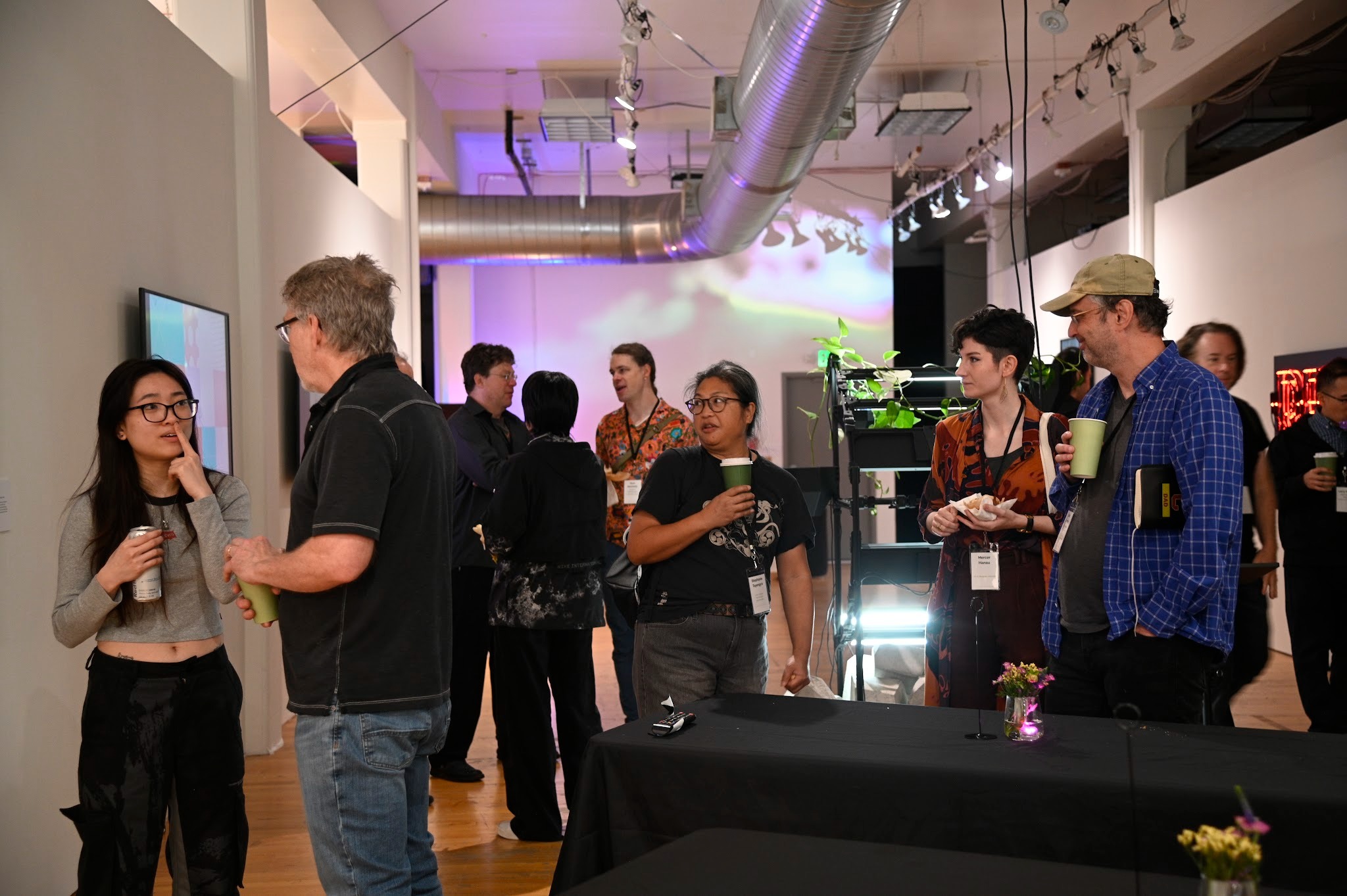
Join us for our social soiree including cocktails (21+), where you can meet the exhibiting artists. This event is open to registered Symposium attendees and their guests.
Community Debrief Meeting
Join us for a debriefing session discussing highlights from the events, lessons learned, and areas for improvement.
html code here